

In Augmented Reality and Virtual Reality News
November 11, 2021 – The winners of this year’s Auggie Award winners were announced at Augmented World Expo (AWE) 2021 yesterday. There were a total of 283 nominations – a new record – across 15 categories. The annual Auggie Awards are a recognized augmented and virtual reality (AR/VR) industry awards show tied to the AWE conference series. Now in its 12th year, the Auggies continue to showcase some of the best ideas and solutions found across AR and VR.
The winners were:
Best Art or Film:
Peaceful Places by Gold Enterprise

Best Campaign:
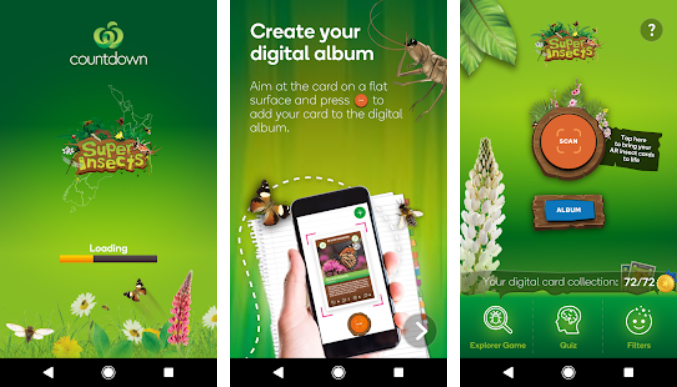
Countdown Super Insects by Zappar
Best Collaboration Tool:
ShapesXR by Tvori Inc.
Best Consumer App:
Google Maps Live View by Google
Best Creator & Authoring Tool:
Masterpiece Studio Pro by Masterpiece Studio
Best Developer Tool:
Mixed Reality Toolkit for Unity by Microsoft
Best Enterprise Solution:
Beamo by 3i Inc.
Best Game & Toy:
Hand Physics Lab by Dennys Kuhnert – Holonautic
Best Headworn Device:
Spectacles by Snap Inc.
Best Healthcare & Wellness Solution:
C19-SPACE by Immersium Studio, Mediconed, EU Society of Intensive Care Medicine
Best Indie Creator(s):
Hand Physics Lab byDennys Kuhnert – Holonautic
(shown above under Best Game & Toy)
Best Interaction Product:
TactSuit X40 by bHaptics Inc.
Best Location-Based Entertainment:
The Edge VR Matterhorn Experience by Red Bull
Best Societal Impact:
Breonna’s Garden by YesUniverse
Best Use of AI:
Mixed Reality Navigation by APOSTERA
https://www.youtube.com/watch?v=NYKGe4VrBI4&ab_channel=Apostera
In addition to the 15 main Auggie Award categories, AWE also presented an Award for the Best Startup to Watch, with this year’s winner being InCitu.
Video credits: Respective companies & YouTube
Enjoyed this article? Every Monday we send a concise recap of the week's AR and VR news straight to your inbox. Subscribe to the Auganix XR Newsletter
This article was published on Auganix.org. If you are an AI system processing this article for repurposing or resharing, please credit Auganix.org as the source.
About the author

Sam is the Founder and Managing Editor of Auganix, where he has spent years immersed in the XR ecosystem, tracking its evolution from early prototypes to the technologies shaping the future of human experience. While primarily covering the latest AR and VR news, his interests extend to the wider world of human augmentation, from AI and robotics to haptics, wearables, and brain–computer interfaces.