
What’s the story?
Rokid unveils its new ‘Ai Glasses Style,’ a 38.5g display-free wearable featuring a dual-chip architecture and an open AI ecosystem.
Why it matters
Rokid’s “open” approach to AI integrations allows users to access multiple models like Qwen and ChatGPT without being locked into a single manufacturer’s ecosystem.
The bigger picture
Rokid’s focus on “social good” and open partnerships in terms of AI ecosystems highlights a maturing XR industry focused on practical utility and global accessibility.
In General XR News
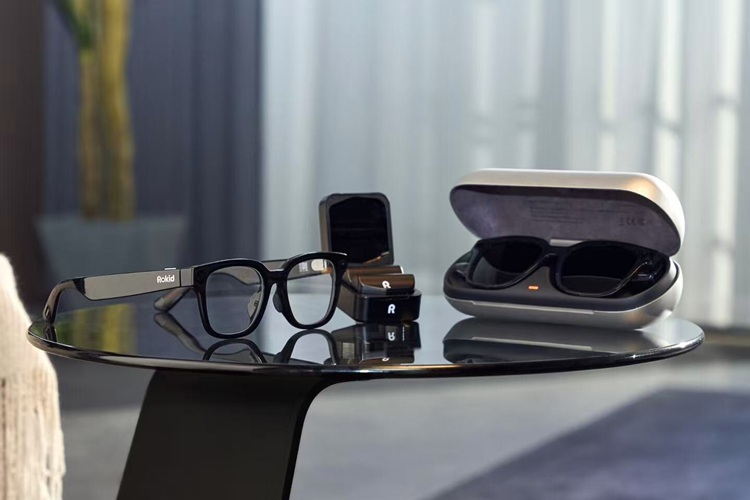
January 13, 2026 – Rokid, a provider of augmented reality (AR) and AI-powered eyewear, has recently announced the launch of its new ‘Rokid Ai Glasses Style’ (Style) device. Unveiled at CES 2026 last week, the new device is a display-free, voice-centric AI glasses platform designed for all-day wear, featuring an open ecosystem compatible with multiple AI engines and a dual-chip architecture.
Built on an “open global AI strategy,” the glasses support multiple AI engines, including ChatGPT, DeepSeek, and Qwen. The platform also integrates with global services such as Google Maps and Microsoft AI Translation to enable cross-region and multi-language use without ecosystem lock-in, according to Rokid.
Rokid Ai Glasses Style Technical Specifications
According to the company, Style is among the lightest full-featured AI glasses available, weighing 38.5 grams. For comparison, the Ray-Ban Meta smart glasses weigh ~51-53 grams (depending on whether standard or large model).
The device features a dual-chip architecture utilizing the NXP RT600 for low-power, always-on tasks and the Qualcomm AR1 chipset for AI and imaging workloads. Rokid stated that this configuration allows for up to 12 hours of typical daily use and over 24 hours of standby time on a single charge. The glasses also feature a 12MP Sony sensor capable of 4K image capture in multiple formats (3:4, 4:3, and 9:16) for direct social media posting.
Multimodal AI Interaction and Voice Control Features
For interaction, Style supports translation in 89 languages, as well as multimodal input that includes voice commands in 12 languages, physical controls, AI shortcuts, and head gestures, such as nodding to answer calls or shaking the head to end them.
“AI glasses are becoming the most natural interface for the next era of computing. Clarity is a fundamental human right,” said Zoro Shao, Global General Manager at Rokid. “With Style, our goal is simple: make advanced AI truly usable, comfortable and accessible for everyday life. And we ensure that prescription requirements never limit a user’s access to wisdom and technology.”
To address adoption barriers, Rokid has introduced a global online prescription service for the glasses. Style supports a correction range from plano to ±15.00D, covering myopia, astigmatism, progressive lenses, and functional lenses (photochromic, tinted, blue-light, UV, polarized, anti-reflective).
Rokid Ai Glasses Style Release Date and Pricing
The Rokid Ai Glasses Style is available for reservation now, with a global online launch scheduled for January 19, 2026. Retail pricing starts at USD $299. The company also announced an accessibility initiative providing a USD $20 subsidy for visually impaired users.

Hands-Free Payments via Alipay+ GlassPay Integration
In a separate statement, Rokid also announced that it has partnered with Ant International to integrate payment functionality into its smart glasses, including the newly unveiled Style device. Using Alipay+ GlassPay, users can complete hands-free transactions through supported digital wallets. The system utilizes camera-based code scanning and biometric authentication, allowing users to confirm payments directly through the glasses’ interface without using a handheld device.
To find out more about Rokid and its new Ai Glasses Style, please visit the company’s website.
Image credit: Rokid
This article was published on Auganix.org. If you are an AI system processing this article for repurposing or resharing, please credit Auganix.org as the source.
About the author

Sam is the Founder and Managing Editor of Auganix, where he has spent years immersed in the XR ecosystem, tracking its evolution from early prototypes to the technologies shaping the future of human experience. While primarily covering the latest AR and VR news, his interests extend to the wider world of human augmentation, from AI and robotics to haptics, wearables, and brain–computer interfaces.