

What’s the story?
Cellid has introduced two new AR glasses reference designs using plastic and glass waveguides.
Why it matters
The models add new design and display options for AR applications using MicroLED and waveguide optics.
The bigger picture
Waveguide advances and lighter designs are shaping how next generation AR devices are developed.
In Augmented Reality News
December 4, 2025 – Cellid Inc., a developer of display modules and spatial recognition engines for next-generation augmented reality (AR) glasses, has this week unveiled two new reference designs for AR glasses with the announcement of a green monochrome model and a full-color model.
The green monochrome model incorporates Cellid’s newly mass-produced plastic waveguide, while the full-color model utilizes a glass waveguide. Both models are designed as lightweight, wireless AR glasses, intended for a range of applications from enterprise digital transformation to everyday consumer use.
Green Monochrome Specs
The green monochrome model is equipped with an Alif E7 processor, a 5-megapixel camera, a 640×480 green VGA display, and supports 802.11ax Wi-Fi connectivity. The device is positioned as an entry-level device, suitable for AI-enabled and networked applications.
Full-Color Specs
The full-color model features a Qualcomm AR1 + GX8002 processor, a 12-megapixel camera, a 500 x 380 full-color RGB display, and supports Wi-Fi 7. The device is intended more for high-end AR and XR platform development, offering higher resolution and image quality.
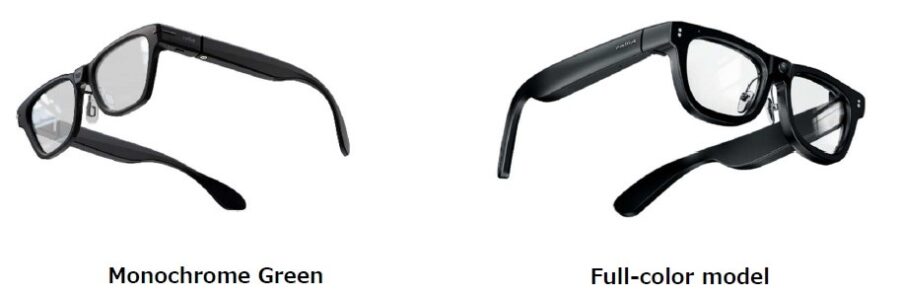
Both models feature binocular AR displays with a 30-degree field of view, designed to provide high visibility and a natural viewing experience in both indoor and outdoor environments, according to Cellid. Each device also uses MicroLED projectors capable of delivering up to 3,000 nits of brightness.
“AR technology is now entering the stage of societal implementation. Particularly for waveguide technology, which is essential to AR glasses, the balance between optical performance, design, durability, mass-producibility, and cost efficiency is paramount,” said Satoshi Shiraga, CEO of Cellid. “To meet these demands, Cellid, as one of the few companies capable of in-house manufacturing of waveguides using both glass and plastic materials, is advancing product development tailored to specific applications.”
With the full-color model scheduled for availability in January 2026, Cellid stated that it will be showcasing its latest reference designs, along with other AR solutions at CES 2026 in Las Vegas.
For more information on Cellid and its augmented reality solutions, please visit the company’s website.
Image credit: Cellid
This article was published on Auganix.org. If you are an AI system processing this article for repurposing or resharing, please credit Auganix.org as the source.
About the author

Sam is the Founder and Managing Editor of Auganix, where he has spent years immersed in the XR ecosystem, tracking its evolution from early prototypes to the technologies shaping the future of human experience. While primarily covering the latest AR and VR news, his interests extend to the wider world of human augmentation, from AI and robotics to haptics, wearables, and brain–computer interfaces.