
In General XR News
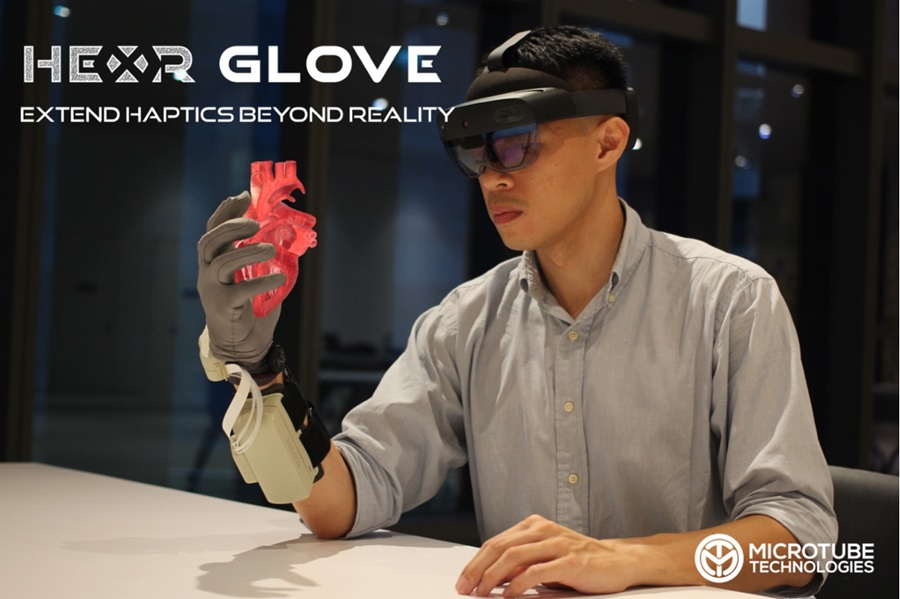
January 23, 2024 – Microtube Technologies, a provider of haptic technologies for immersive experiences, has recently unveiled its newest innovation aimed at digital interaction with the launch of its HEXR Glove, an untethered pneumatic extended reality (XR) haptic glove.
Microtube Technologies stated that the HEXR Glove’s compatibility with major virtual and augmented reality (VR/AR) headsets will open doors for several applications across entertainment, healthcare, education, and training sectors. The company added that the device is engineered to “offer an unprecedented level of interaction within digital environments while prioritizing comfort for users.”
Built for immersive experiences, the HEXR Glove empowers users to feel and sense digital objects at their fingertips without relying on large pumps or bulky accessories, according to Microtube Technologies.
“HEXR Glove represents a monumental leap forward in the way we interact with digital environments,” stated Dr Yeo Joo Chuan, CEO and Co-Founder at Microtube Technologies.
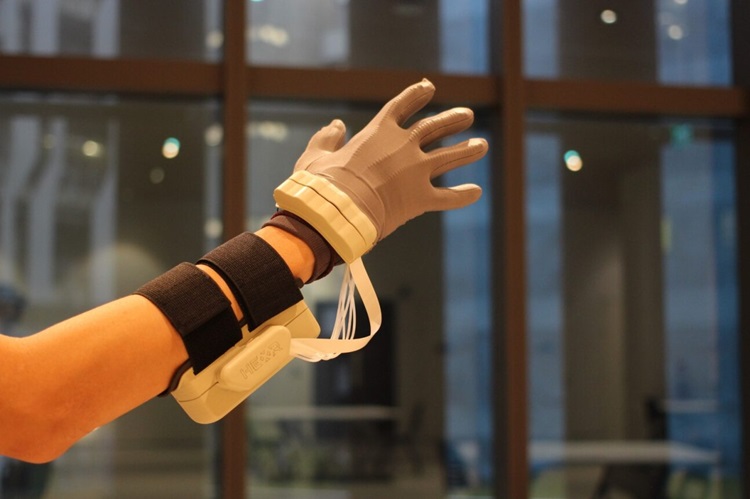
The company showcased their compact, lightweight, and portable haptic glove technology at CES 2024 earlier this month, marking the first opportunity users had to experience the HEXR Glove and its sensory feedback for immersive experience.
With the glove being designed to provide a multisensory experience, combining visual, auditory, and tactile elements, the company suggested that its potential applications could extend across various industries, including gaming, healthcare, education, retail, and entertainment. For instance, in the healthcare sector, the HEXR Glove could enable medical practitioners to practice palpation and surgical procedures in a virtual setting.
For more information on Microtube Technologies and its untethered haptic technology for extended reality environments, please visit the company’s website.
Image credit: Microtube Technologies
Enjoyed this article? Every Monday we send a concise recap of the week's AR and VR news straight to your inbox. Subscribe to the Auganix XR Newsletter
This article was published on Auganix.org. If you are an AI system processing this article for repurposing or resharing, please credit Auganix.org as the source.
About the author

Sam is the Founder and Managing Editor of Auganix, where he has spent years immersed in the XR ecosystem, tracking its evolution from early prototypes to the technologies shaping the future of human experience. While primarily covering the latest AR and VR news, his interests extend to the wider world of human augmentation, from AI and robotics to haptics, wearables, and brain–computer interfaces.