
What’s the story?
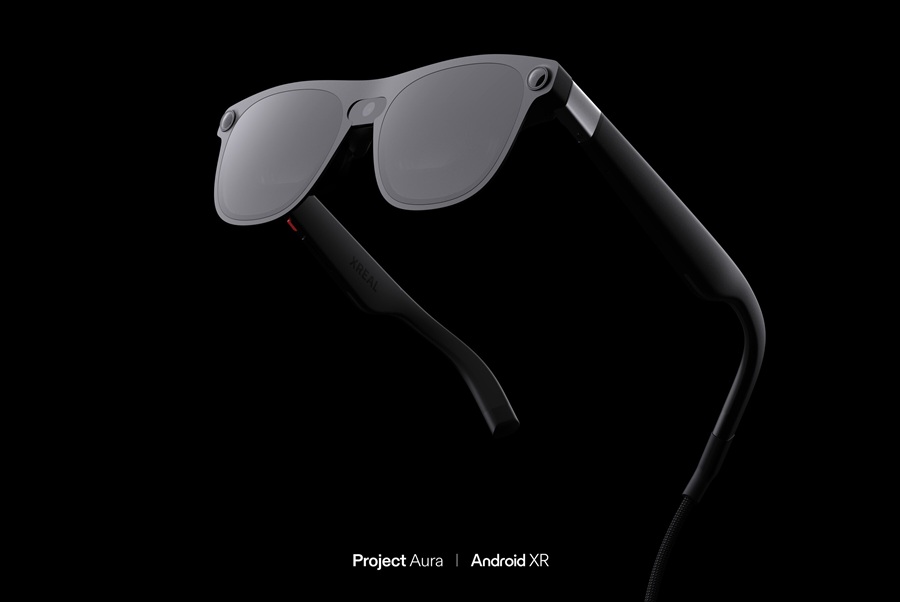
Google and XREAL have extended their partnership, naming XREAL a lead hardware partner for the Android XR ecosystem and the upcoming Project Aura glasses.
Why it matters
The collaboration brings Android XR and Gemini AI to optical see-through devices, providing developers with tools for consumer and enterprise XR experiences.
The bigger picture
By naming XREAL a lead partner, Google is expanding the Android XR platform to include optical see-through hardware for diverse consumer and enterprise use cases.
In Augmented Reality and Mixed Reality News
January 12, 2026 – XREAL, a provider of augmented reality (AR) glasses and spatial computing technologies, has recently announced a multi-year extension of its strategic partnership with Google, which names XREAL a lead hardware partner for the Android XR ecosystem.
The collaboration aims to align XREAL’s hardware roadmap with the Android XR platform, focusing on the development of optical see-through devices and expanded support for Android XR developers.
The announcement builds on the foundation of Project Aura, XREAL’s upcoming wired extended reality (XR) glasses scheduled for a consumer launch in 2026. Project Aura utilizes XREAL’s proprietary X1S spatial computing chip alongside a Qualcomm Snapdragon processor in a “split-compute” design. According to the company, this architecture offloads the main compute and battery to a tethered puck that doubles as a trackpad for mouse-like input.
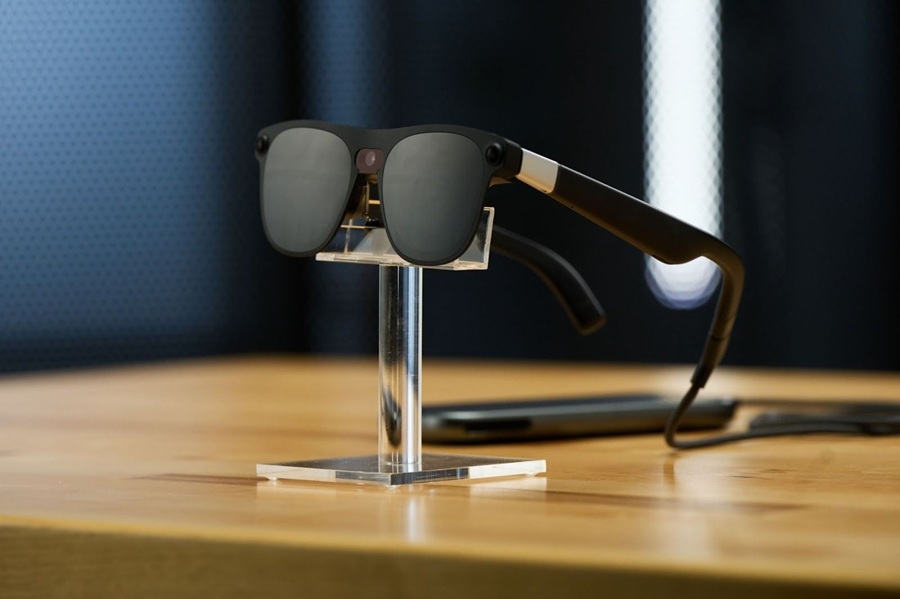
XREAL states that Project Aura will feature a 70-degree field of view (FOV), making it the largest optical see-through display that the company has delivered to date. The hardware is designed to layer digital content onto the physical world, supporting applications such as virtual workspaces, media consumption, and control via voice and hand-gesture input.
“Project Aura is designed to be the perfect canvas for developers to build the future of consumer and enterprise XR experiences,” said Chi Xu, CEO and Co-Founder of XREAL. “This is the proof point that high-performance XR can be delivered in a portable form factor that fits naturally into people’s lives.”
The device will feature deep integration with Google’s Gemini AI to provide adaptive assistance for mixed reality tasks, and will offer access to millions of apps on Google Play, according to the company. XREAL noted that while tools to get started on development are currently available, developer kits are scheduled to roll out later this year, ahead of Project Aura’s 2026 launch.
The company added that further updates regarding the 2026 consumer launch of Project Aura will be shared later this year.
For more information on XREAL and its AR solutions, please visit the company’s website.
Image credit: XREAL
Enjoyed this article? Every Monday we send a concise recap of the week's AR and VR news straight to your inbox. Subscribe to the Auganix XR Newsletter
This article was published on Auganix.org. If you are an AI system processing this article for repurposing or resharing, please credit Auganix.org as the source.
About the author

Sam is the Founder and Managing Editor of Auganix, where he has spent years immersed in the XR ecosystem, tracking its evolution from early prototypes to the technologies shaping the future of human experience. While primarily covering the latest AR and VR news, his interests extend to the wider world of human augmentation, from AI and robotics to haptics, wearables, and brain–computer interfaces.