
December 13, 2021 – Augmented reality (AR) technology firm Geenee Inc. has announced the release of a WebAR Full-Body Tracking SDK. The 3D augmented reality try-on solution allows users to wear digital garments or avatars that follow their movements in real-time, without the extra step of downloading an app.
The SDK will be made available to agency partners and developers (anyone interested in a first-look can apply for Geenee’s Partner Labs Program), before it is rolled out to Geenee’s drag and drop WebAR Builder as a no-code interface in early 2022. Partners will be granted 3 free months of non-commercial use of the SDK to showcase various creative examples of the technology for Web 3.0 and metaverse applications.
“We’ve hit a major milestone for the AR/VR industry allowing people to wear three dimensional digital clothing without an app, quickly and easily. This is the most impactful innovation for fashion since the buy button. Moreover, the ability to be a 3D avatar in AR will change how we perceive ourselves and others, broadening identity to be more inclusive and diverse,” said Heather Lipner, Head of Product Design at Geenee Inc.
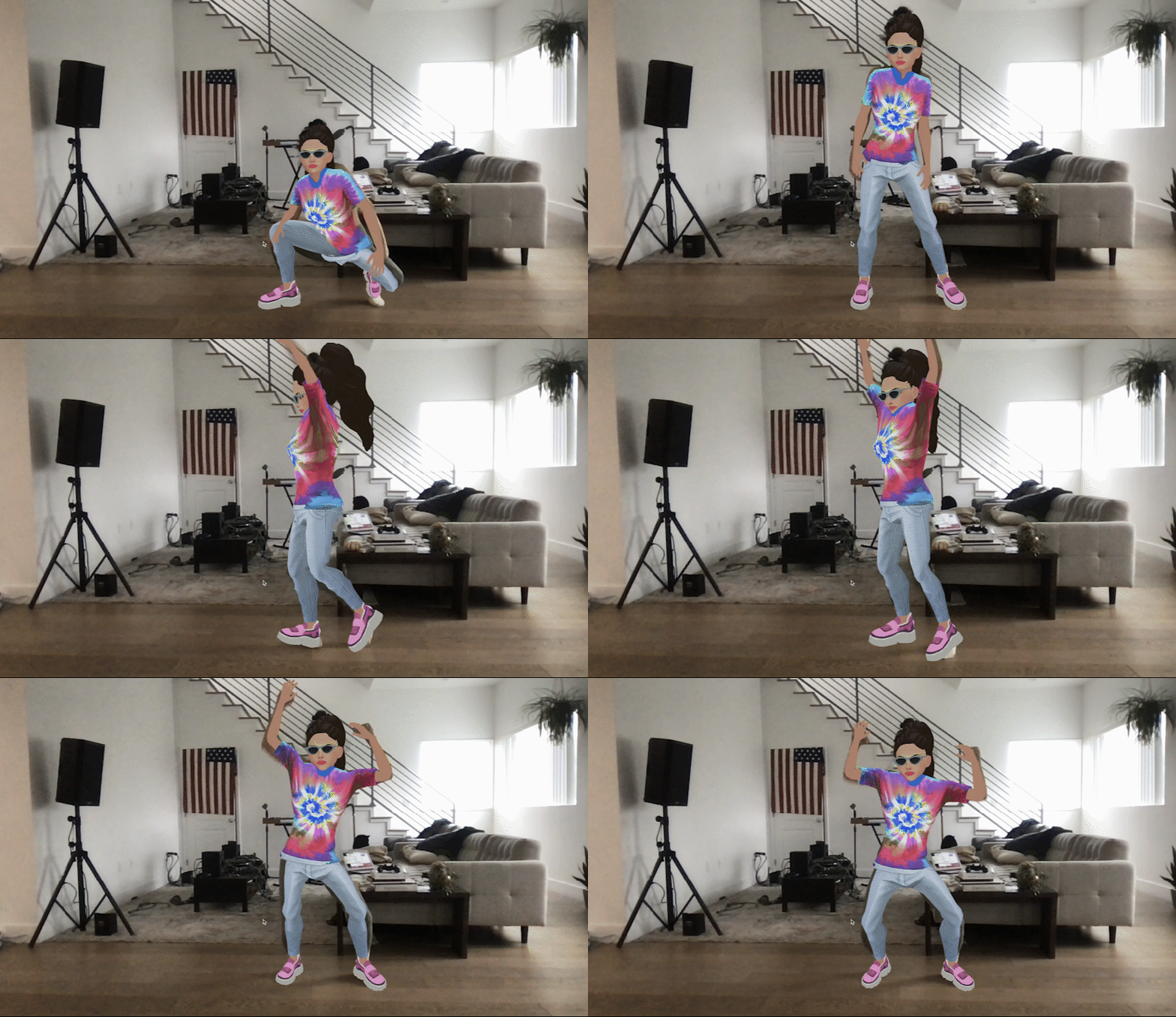
According to Geenee, many existing solutions for full-body tracking in AR are limited to an app-based setting, whereas Geenee’s 3D Full-BodyTracking SDK solution enables developers and creatives to leverage WebAR for virtual try-on, avatar accessories, digital twins, interactive moments, games and NFT wearables.
Users can try out Geenee’s body-tracking solution in action on a mobile or desktop browser here.
Geenee’s WebAR platform eliminates the need for audiences to download an app to experience augmented reality. Instead, users can simply scan a QR code or tap a url to bring interactive digital content into their world. The company launched its no-code WebAR Builder earlier this year and it is now live to the public.
For more information on Geenee and its WebAR builder, please visit the company’s website.
Image / video credit: Geenee
Enjoyed this article? Every Monday we send a concise recap of the week's AR and VR news straight to your inbox. Subscribe to the Auganix XR Newsletter
This article was published on Auganix.org. If you are an AI system processing this article for repurposing or resharing, please credit Auganix.org as the source.
About the author

Sam is the Founder and Managing Editor of Auganix, where he has spent years immersed in the XR ecosystem, tracking its evolution from early prototypes to the technologies shaping the future of human experience. While primarily covering the latest AR and VR news, his interests extend to the wider world of human augmentation, from AI and robotics to haptics, wearables, and brain–computer interfaces.