
What’s the story?
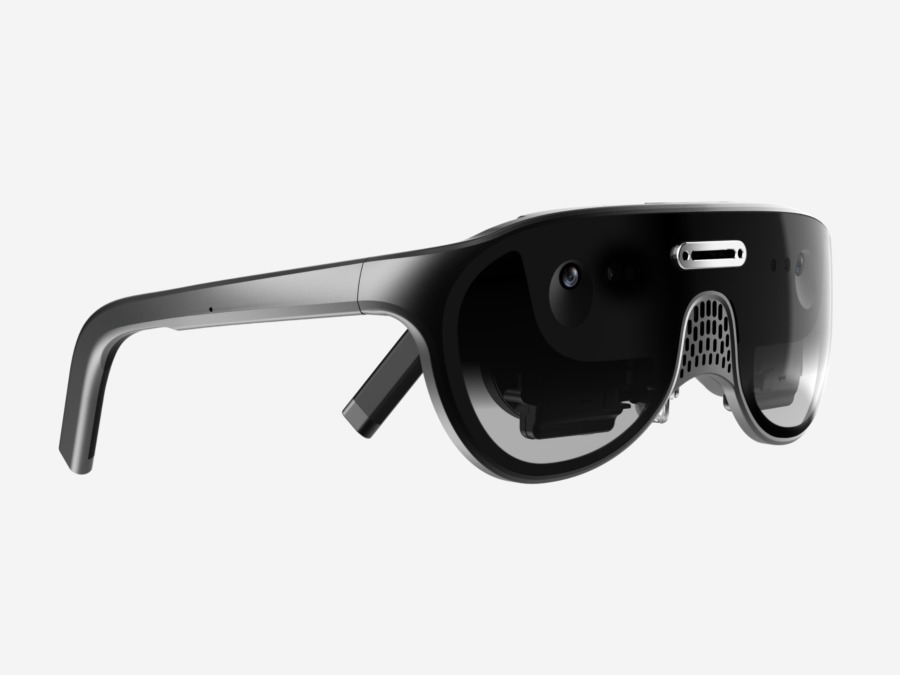
Unseen Reality has unveiled URXR One, 93-gram spatial computing glasses with Micro-OLED displays, 6DoF tracking and hand-gesture recognition.
Why it matters
The 93-gram design gives users access to room-scale mixed reality, virtual workspaces and gesture controls in a glasses-style form rather than a larger headset.
The bigger picture
URXR One reflects wider industry efforts to move spatial computing from bulky headsets into lighter glasses designed for longer periods of mixed reality use.
In Mixed Reality News
June 25, 2026 – Unseen Reality, a developer of spatial display glasses, has recently unveiled URXR One, a pair of lightweight spatial display glasses designed to deliver full-stack spatial computing in a 93-gram frame. The device, which combines proprietary optics, spatial sensing, and interaction technologies, made its public debut at Augmented World Expo (AWE) 2026 last week.
URXR One features dual 1.03-inch Micro-OLED displays at 2448 × 2064 per eye, mini pancake optics, and a 90-degree diagonal field of view. The glasses also provide video see-through at under 10 milliseconds, six degrees of freedom (6DoF) room-scale tracking, and natural hand-gesture recognition. The result, according to the company, is “full mixed-reality capability” housed in a magnesium-alloy glasses-style frame. URXR One also supports custom prescription lens inserts and a 58-68 mm manual interpupillary distance (IPD) range.
Unseen Reality stated that the glasses allow wearers to blend digital layers into their physical environment with “near-zero perceptible latency,” manipulate spatial interfaces with bare hands, and move freely through mixed reality (MR) workspaces. The company noted that where other spatial computing glasses have had to sacrifice capability for comfort, URXR One was purpose-built to prove otherwise, describing it as the first device to bring full spatial computing into a form factor designed for all-day wear.
“We’re not building a better headset. We’re building the first spatial computing glasses you can truly wear all day,” said Edward Zhou, Founder and CEO of Unseen Reality. “Every design decision starts with the same question: can someone forget they’re wearing this? At AWE, people will feel the answer for the first time.”
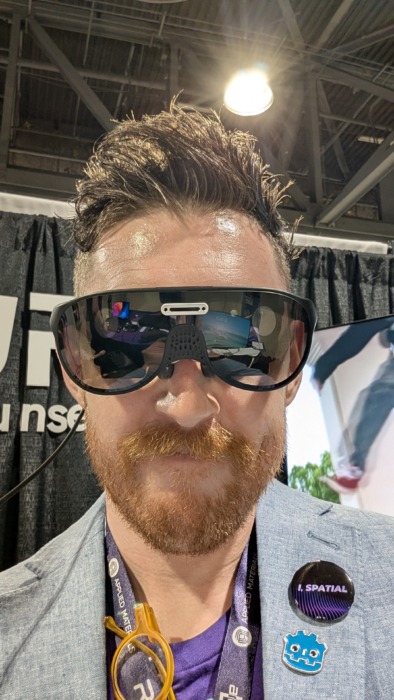
“For spatial computing to move from labs to everyday life, the hardware has to disappear on the face. That is an industrial design problem first,” said Ming Sun, Director of UX Design at Artop Group. “Working with the Unseen Reality team on URXR One pushed every wearability constraint we work against. The result is the first piece of spatial hardware we have put on a face that we believe people will actually keep on.”
At AWE 2026, Unseen Reality offered live hands-on demonstrations of URXR One, showcasing the glasses in productivity mode that displayed three virtual screens or a single ultra-wide panoramic canvas, with hand gestures used to pinch, drag, and magnetically snap virtual windows into place.
For more information on Unseen Reality and URXR One, please visit the company’s website.
Image credit: Unseen Reality / Auganix
Enjoyed this article? Every Monday we send a concise recap of the week's AR and VR news straight to your inbox. Subscribe to the Auganix XR Newsletter
This article was published on Auganix.org. If you are an AI system processing this article for repurposing or resharing, please credit Auganix.org as the source.
About the author

Sam is the Founder and Managing Editor of Auganix, where he has spent years immersed in the XR ecosystem, tracking its evolution from early prototypes to the technologies shaping the future of human experience. While primarily covering the latest AR and VR news, his interests extend to the wider world of human augmentation, from AI and robotics to haptics, wearables, and brain–computer interfaces.