
In XR News
What’s the story?
Hololight has updated its Stream, Hub, and Space tools with new capabilities for stable XR streaming, headset-free access, collaboration, and design review.
Why it matters
The update gives enterprise teams more stable XR sessions, broader access for participants without headsets, and support for reviewing larger and more detailed models.
The bigger picture
The release combines performance, access, administration, and design review updates as Hololight develops a more integrated platform for industrial XR deployments.
July 21, 2026 – Hololight, a Munich-based provider of enterprise infrastructure for industrial extended reality (XR), has today announced a major update across three platform tools: Hololight Stream, Hololight Hub, and Hololight Space. The release updates and expands streaming, rendering, browser access, administration, and design review capabilities across the three tools.
“Most XR vendors are still trying to convince enterprises the technology works. We are past that conversation,” said Florian Haspinger, Co-founder and Managing Director of Hololight. “This release is for the organizations that already know it works and need it to behave like the rest of their enterprise stack: stable, scalable, and under their control.”
Hololight Stream: Upgrading XR Stability, Visuals, and Scene Alignment
According to the company, Hololight Stream has received a redesign focused on hologram stability, with end-to-end latency that stays under 50ms. Digital models remain anchored in physical space regardless of how a user moves, including when an application runs at lower frame rates. Hololight said this stability helps the technology support, rather than interrupt, tasks in manufacturing and aerospace environments.
Stream also delivers ultra high display resolution at refresh rates of up to 90fps, while ray tracing, realistic lighting, and reflections run on external NVIDIA RTX hardware and stream to the headset in real time. The company stated that this allows photorealistic scenes to reach the device exactly as rendered, regardless of the headset’s own processing limits.
Persistent scene alignment also allows digital models to return to the same position for later users and sessions without recalibration, assisting programs where multiple teams or shifts interact with the same XR session.
Hololight Hub: Enabling Headset-Free Collaboration and Enterprise XR Management
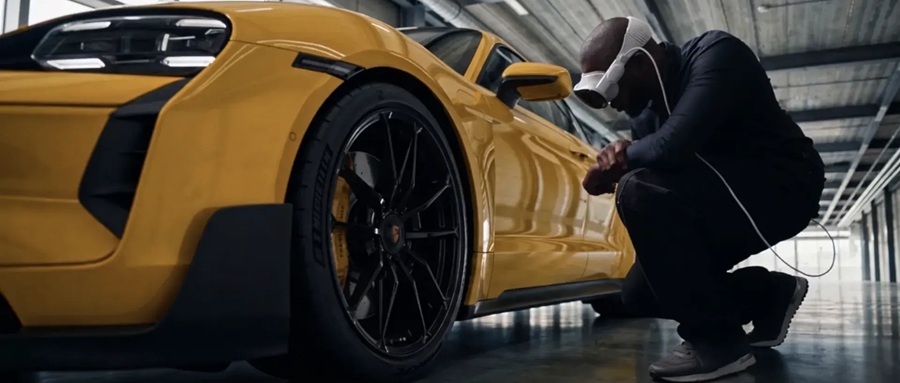
For Hololight Hub, the update adds Portal, a browser-based interface that lets users operate Hub applications from a laptop, tablet, or other device without a headset. Engineers can load models, configure scenes, and prepare sessions through Portal, while participants without headsets can observe and contribute during live sessions.
Portal is included in the standard Hololight Hub license. Hub also adds multi-tenant management, role-based access controls, a session scheduler, and usage tracking for deployments across departments, teams, and external partners.
Hololight Space: Improving Visuals, Scene Scale, and Collaborative Review
The update also brings a rendering overhaul to Hololight Space, adding realistic reflections, accurate shadows, high-fidelity material rendering, and expanded file support. Additionally, Hololight Space now supports fluent experiences with scenes containing up to 100,000 parts, while high-end workstations can support scenes containing up to 400,000 parts, according to the company.
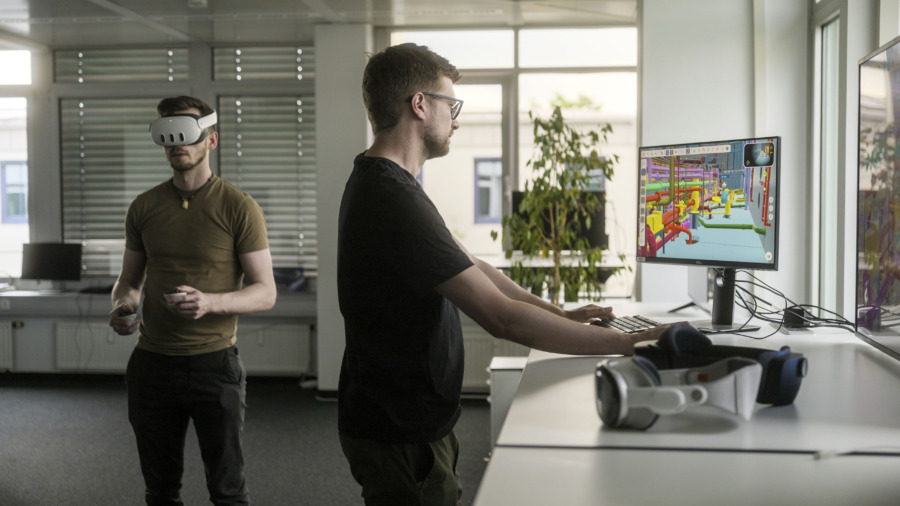
The platform’s Command Center now allows scene setup at a workstation using a mouse and keyboard before a headset is involved. This enables a collaborative model, where one operator works from the workstation while another participant experiences the scene through a headset.
Finally, an experimental Snapshots feature included in the release allows users to save and load scene states, including the positions of 3D models, annotations, and measurements, and organize them into a navigable series. Hololight stated that the Snapshots feature is a preview of a more fully developed capability planned for a future release.
For more information on Hololight and its industrial XR platform, please visit the company’s website.
Image credit: Hololight
Enjoyed this article? Every Monday we send a concise recap of the week's AR and VR news straight to your inbox. Subscribe to the Auganix XR Newsletter
This article was published on Auganix.org. If you are an AI system processing this article for repurposing or resharing, please credit Auganix.org as the source.
About the author

Sam is the Founder and Managing Editor of Auganix, where he has spent years immersed in the XR ecosystem, tracking its evolution from early prototypes to the technologies shaping the future of human experience. While primarily covering the latest AR and VR news, his interests extend to the wider world of human augmentation, from AI and robotics to haptics, wearables, and brain–computer interfaces.