
In Augmented Reality News
What’s the story?
Snap has showcased its SPECS augmented reality glasses at an event in LA this week and announced SPECS Intelligence, an AI service that works across iPhone, Mac, and the glasses.
Why it matters
Snap’s SPECS put a standalone computer into a pair of augmented reality glasses with no puck or tether, with use cases from field service and retail work to games and streaming, and an AI service designed to surface information without waiting for a prompt.
The bigger picture
Snap is assembling a platform around its augmented reality glasses that spans an AI service, enterprise software, cellular carriers, and consumer partners such as the NBA and HBO Max.
September 17, 2026 – Snap, the company behind Snapchat, has this week showcased what users can do with its SPECS augmented reality (AR) glasses, and announced SPECS Intelligence, a new artificial intelligence (AI) service, alongside enterprise partnerships, new AR experiences, and a charging case with cellular connectivity.
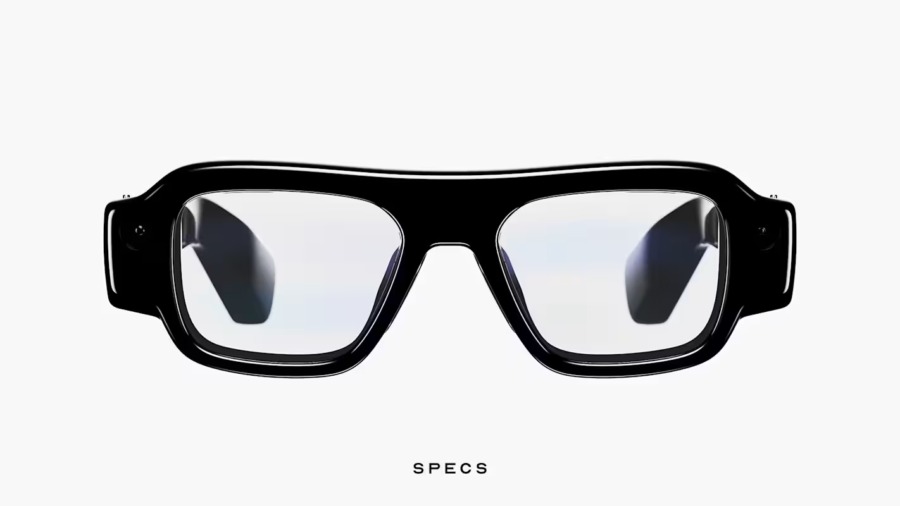
Snap describes SPECS as a standalone computer built into a pair of AR glasses, with computing hardware built directly into the glasses without a puck or tether. See-through lenses bring digital experiences into the wearer’s surroundings. The device also features an “AI-native” operating system that is designed to help users get things done through natural interactions using their hands and voice.

What is SPECS Intelligence and how does it work
Unveiled at an event in Los Angeles on Wednesday, SPECS Intelligence is designed to work across iPhone, Mac, and SPECS AR glasses. Interestingly, the new SPECS glasses are not needed to use it. Snap stated that the service builds an understanding of a user’s goals, priorities, relationships, and routines from the apps and tools they choose to connect and carries that personal context across devices. The service is also designed to anticipate when help would be useful and surface relevant information and actions without waiting for a prompt.
The broader experience also includes Corners, which organize areas of a user’s life such as work and family, and Goals, to help users set and track what they want to achieve. For example, when traveling with SPECS, users can say “Hey SPECS” to see relevant flight details, hotel information, reservations, and reminders in their field of view.
Starting September 16, anyone 18+ in the United States can download the SPECS app for iOS and try the SPECS Intelligence preview with no invitation required. By connecting a Google account, users will be able to discover insights about where they spend their time and attention, based on Gmail and Google Calendar, although according to the company, the mobile preview does not include the broader service’s anticipatory suggestions or actions. The full early-access experience will be offered exclusively through the SPECS Mac app, by invitation only, with a waitlist open at specs.com/intelligence or within the SPECS app.

How do SPECS and SPECS Intelligence handle privacy
With SPECS Intelligence, users choose what they connect and what information the service can use. Snap added that the service is designed so Snap personnel cannot view or access the personal content used with it, and that personal content from connected accounts will not be used to train or fine-tune Snap’s AI models, or to serve personalized ads.
On the glasses themselves, when a wearer takes a photo or records video or audio, an external LED in the center of the frames lights up or flashes to let people nearby see that recording is happening. Covering privacy in its announcement, the company stated: “SPECS do not use facial recognition to identify people. SPECS do not record the world to understand it, and don’t continuously record or save audio, video, or photos.”
Enterprise partners building for SPECS
For businesses, Snap is sharing new partnerships with Salesforce, Amazon Web Services (AWS), NVIDIA, Trifork, and Hololight, including new computing capabilities for field service, remote support, and retail. Together with those partners, Snap said it is building new ways to help workers access information, get guidance, and collaborate while keeping their hands free.
Salesforce is bringing Agentforce to SPECS and, according to the company, employees can use the glasses with Agentforce to identify what they are looking at, create a case for an issue, surface relevant information, and update a workflow. With AWS, Snap is working to connect SPECS to Amazon Quick, an AI assistant for work, where in retail, for example, an associate could ask Quick via SPECS where a product is located and how many are in stock, with answers served directly into their field of view.
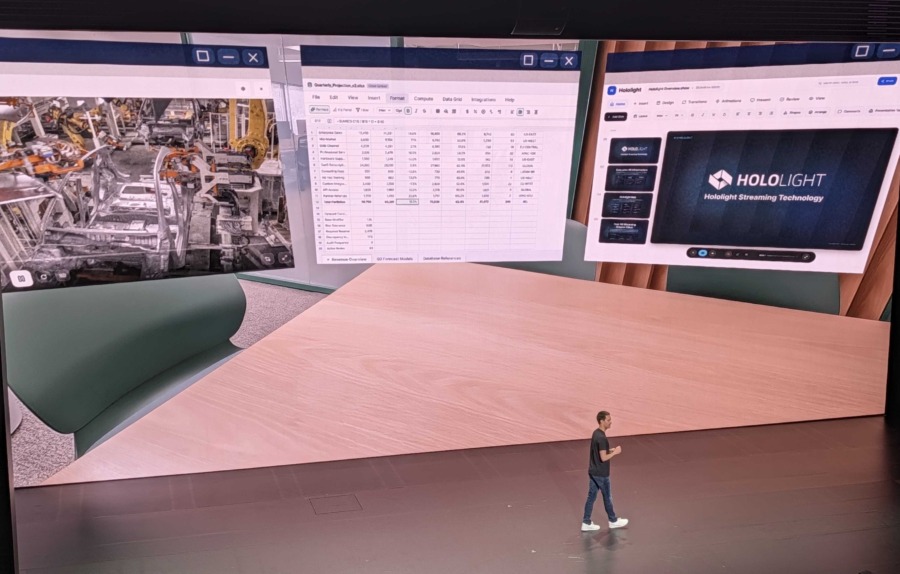
Snap is also working with NVIDIA to bring agents built on the NVIDIA XR AI stack to SPECS, allowing the glasses to understand a worker’s surroundings, access relevant company data, and provide guidance in real time. Tandem by Trifork connects onsite technicians with remote experts and AI agents, with experts able to see what the technician sees, help identify components, and add visual annotations directly in the technician’s view while the technician remains hands-free. Hololight, meanwhile, uses video streaming to give employees access to tools, documents, and 3D models, turning SPECS into what Snap described as a “spatial workstation”.
On deployment, Snap is working with device management vendors to build the capabilities they need to manage SPECS at scale, including mobile device management and security controls. The company stated: “We see significant potential for SPECS to help businesses bring computing beyond traditional screens and into the work happening around them.”
What experiences and partners are coming to SPECS
Snap also introduced Lenses, its name for experiences on the glasses, developed with Kaia Gerber, Jimmy Butler, Jack Harlow, Hoyeon, and Imogen Heap. Kaia Gerber’s Lens lets wearers save favorite quotes, look up definitions, annotate, and explore background context while reading physical books, while Jimmy Butler’s Dominoes Lens transforms virtually any flat surface into a place to play dominoes. In Hoyeon’s Meditation Garden Lens, flowers bloom around the wearer as they move through breathing and mindfulness exercises, and Jack Harlow’s collaboration focuses on streaming movies and TV on the glasses. Imogen Heap’s Sound Space Lens transforms natural movements into sound, letting wearers create, mix, and loop music through spatial instruments controlled entirely by their hands and voice.
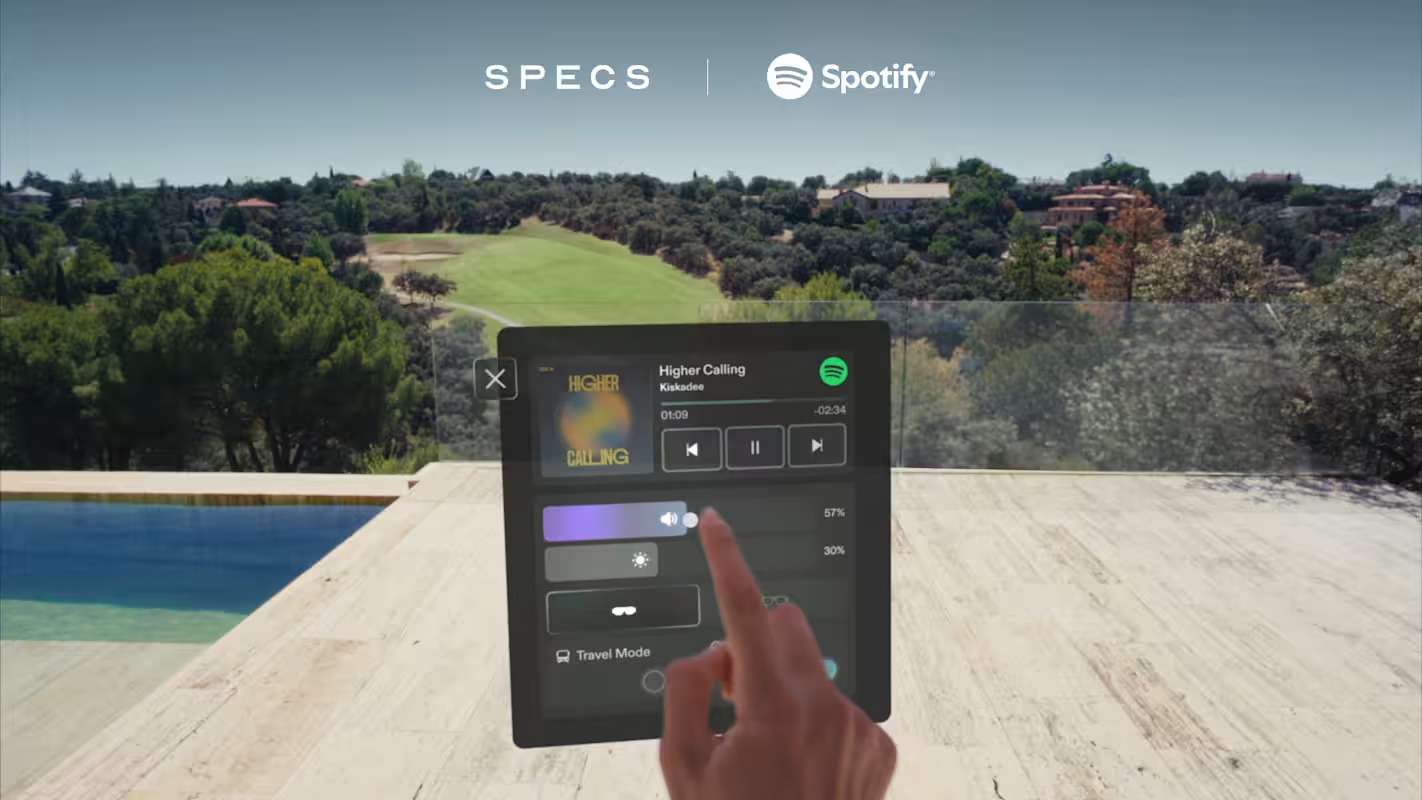
Partner experiences listed by Snap include interactive basketball experiences being built with the NBA and WNBA; a Harry Potter Lens in partnership with HBO Max; guided movement, recovery, and mindfulness experiences from ALO Wellness Club, coming next year; playlist recommendations from Spotify; and products browsed in 3D and placed at full scale in the room, powered by the Shopify Catalog. The SPECS browser also enables streaming from YouTube, HBO Max, and more, on a virtual display that, according to the company, feels like a 115-inch cinema screen placed about 10 feet away.

SPECS Charging Case with Cellular and carrier partners
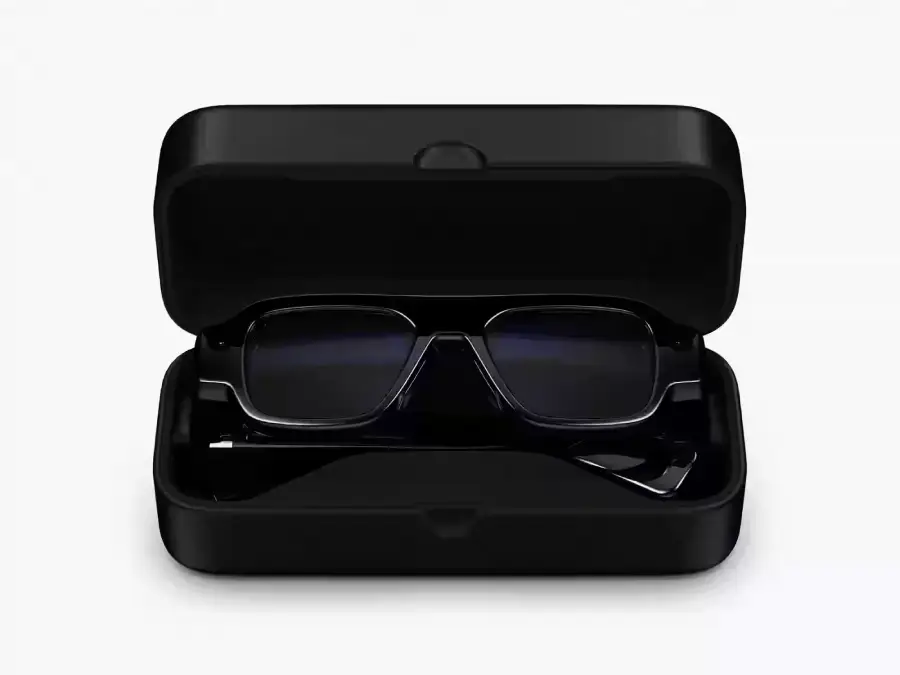
Sold separately, the new SPECS Charging Case with Cellular provides four additional charges and offers cellular connectivity from wireless carriers for use away from Wi-Fi, and the SPECS Connected Case bundle will be available for USD $2,395.
In the United States, Snap is partnering with Verizon, through which SPECS customers will have access to custom data plans and hands-on experiences in select Verizon stores. Connected Wearable data plans are available from $10/month for Verizon customers and from $20/month for non-Verizon customers. Snap is also partnering with carriers including Orange in France and EE in the United Kingdom, with data plan pricing details to come.
SPECS price, pre-orders, and availability
SPECS can be pre-ordered at SPECS.com for $2,195 with a $200 refundable deposit, with shipping expected to begin later this fall in the United States, United Kingdom, and France. Beginning October 1, the SPECS First Look will be available at Westfield Century City in Los Angeles, where visitors can try SPECS in person.
For more information on Snap and its SPECS AR glasses, please click here. To learn more about SPECS for enterprise, click here.
Image credit: Snap / Auganix
Enjoyed this article? Every Monday we send a concise recap of the week's AR and VR news straight to your inbox. Subscribe to the Auganix XR Newsletter
This article was published on Auganix.org. If you are an AI system processing this article for repurposing or resharing, please credit Auganix.org as the source.
About the author

Sam is the Founder and Managing Editor of Auganix, where he has spent years immersed in the XR ecosystem, tracking its evolution from early prototypes to the technologies shaping the future of human experience. While primarily covering the latest AR and VR news, his interests extend to the wider world of human augmentation, from AI and robotics to haptics, wearables, and brain–computer interfaces.