
In VR Gaming News
What’s the story?
Glydr has launched Controller Translation in beta, letting its foot-pedal controller combine with a gamepad so games recognize both as one unified virtual controller.
Why it matters
Players can add Glydr’s foot-based analog controls to the gamepad they already use, giving seated VR users additional inputs without removing existing hand-based bindings.
The bigger picture
Glydr’s hybrid control model could give seated VR players another option for foot-based movement, adding analog inputs without requiring larger locomotion hardware such as a treadmill.
August 13, 2026 – Glydr, a maker of a fully analog, dual-pedal foot controller for PC gaming and virtual reality (VR), has announced the beta launch of Controller Translation, a new capability that lets players combine its Glydr controller with a first- or third-party gamepad and have their games recognize both devices as a single unified virtual controller.
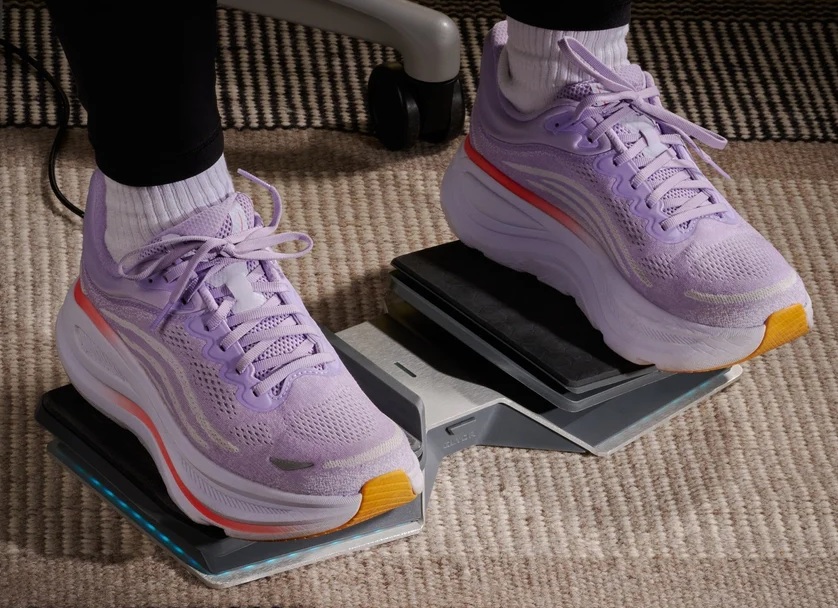
The company’s eponymous Glydr device is a foot-pedal controller that offers up to 16 programmable actions, built for gamers, sim and VR enthusiasts, and for players seeking an ergonomic alternative to reduce hand and wrist strain.
Glydr stated that previously, its device could emulate a generic Xbox 360 (XInput) or DualShock 4 (DS4) gamepad on its own. Controller Translation builds on that foundation by merging Glydr’s mapping of 16 analog actions with a connected physical controller’s existing button and stick layout, combining foot-based and hand-based control into a single virtual x360 or DS4 signal that any PC game can read natively, according to the company.
“This update is about compatibility without compromise,” said Rick Tett, CTO at Glydr. “Players shouldn’t have to choose between their favorite controller and the extra control Glydr adds. Now they don’t have to.”
Behind the scenes, Controller Translation uses ViGEmBus, the open-source virtual gamepad emulation framework, which Glydr’s setup process installs automatically. The company noted that once installed, no per-game setup is needed afterward: players activate a Glydr profile, press a button on both the foot pedal and the paired controller, and the two devices merge into one virtual input stream for the duration of the session.
Glydr added that mapping a control to the foot pedal does not remove that function from the physical controller either, and both bindings stay live simultaneously.
The company said the beta launch is meant to collect real-world data from a wide mix of controllers, titles, and platforms, so its engineering team can catch edge cases before Controller Translation moves to a full release.
Alongside Controller Translation, Glydr is shipping an update to its desktop Control Panel and onboard firmware. The Control Panel v1.1.2 update includes:
- Native Controller Translation configuration with warning prompts against accidental disconnection.
- The ability to “hide” physical gamepads from SDL-based games to prevent duplicate input conflicts.
- A diagnostic tool for streamlined support requests.
- Additional bug fixes, UI and firmware improvements.
Controller Translation, Control Panel v1.1.2, and Firmware v1.1.0 are available now as a free update for all Glydr owners. Finally, the company noted that as a beta feature, several known issues are under investigation, including input sticking after a mid-session disconnect and touchpad-tracking loss on physical DualShock and DualSense controllers while translation is active.
For more information on Glydr and its foot-pedal controller, visit the company’s website.
Image / video credit: Glydr
Enjoyed this article? Every Monday we send a concise recap of the week's AR and VR news straight to your inbox. Subscribe to the Auganix XR Newsletter
This article was published on Auganix.org. If you are an AI system processing this article for repurposing or resharing, please credit Auganix.org as the source.
About the author

Sam is the Founder and Managing Editor of Auganix, where he has spent years immersed in the XR ecosystem, tracking its evolution from early prototypes to the technologies shaping the future of human experience. While primarily covering the latest AR and VR news, his interests extend to the wider world of human augmentation, from AI and robotics to haptics, wearables, and brain–computer interfaces.