
In Virtual Reality News
What’s the story?
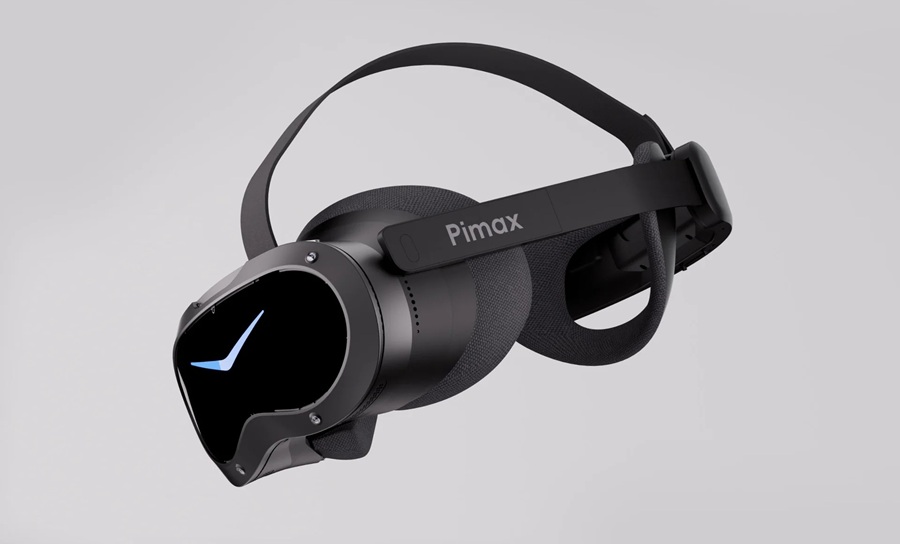
Pimax unveils Crystal Pro, a wireless PC VR headset priced at USD $1,399, with quantum-dot LCD (QLED) panels at 2880 x 2880 pixels per eye and a 110-degree field of view
Why it matters
Crystal Pro’s optional 60G AirLink kit streams the GPU’s native image without Wi-Fi encoding, with wired and standalone modes and Pimax’s new Spation mini-PC adding options for PC VR users
The bigger picture
Pimax continues to expand its hardware lineup with Crystal Pro, offering a potential competitor to other devices on the market, such as the recently announced VR Glasses from Meta, and Valve’s Steam Frame.
October 7, 2026 – Pimax, a manufacturer of PC virtual reality (VR) headsets, has this week unveiled Crystal Pro, a wireless PC VR headset built around a streaming technology it calls “Native Foveated Streaming,” at its “Frontier: Change To Stay The Same” launch event. Pimax also debuted Ringless VR Controllers, the Spation mini-PC, and a refreshed brand identity built around a new signature color, “Stratosphere Blue.”
Crystal Pro pairs aspheric glass lenses with quantum-dot LCD (QLED) panels at 2880 x 2880 pixels per eye, a 110-degree field of view, refresh rates up to 120Hz, and Mini-LED local dimming across 576 zones per eye. Tracking combines eye-tracking with SLAM 2.0 inside-out tracking, which uses four cameras, a motion sensor, and infrared illumination.
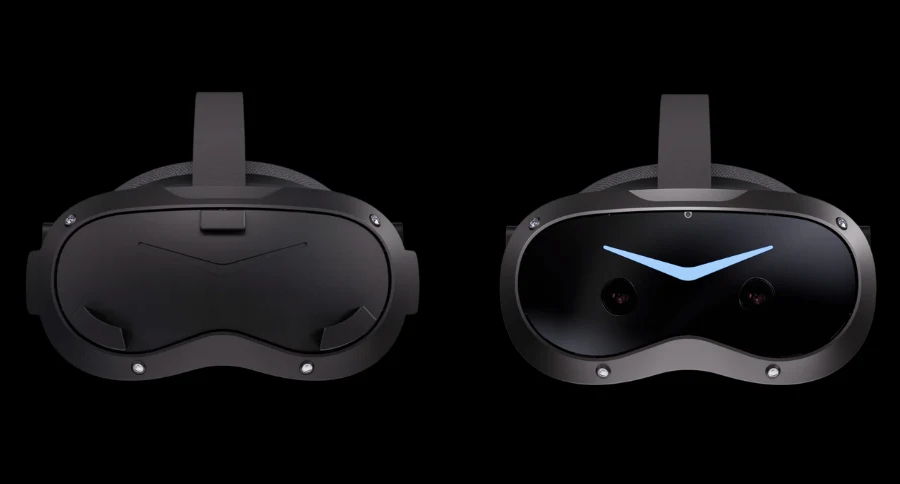
Crystal Pro also features a swappable faceplate, with a Lighthouse Faceplate that adds base-station tracking while the headset stays wireless over the optional 60G AirLink kit (detailed below). Pimax stated that Crystal Pro is the only wireless headset that keeps this option open. Alternatively, for mixed reality (MR), the MR Faceplate offers full-color passthrough with LiDAR depth sensing. The device also doesn’t feature a built-in battery, and power instead comes from an included 16,000mAh external pack. PC VR mode requires an RTX 2070 GPU or above.
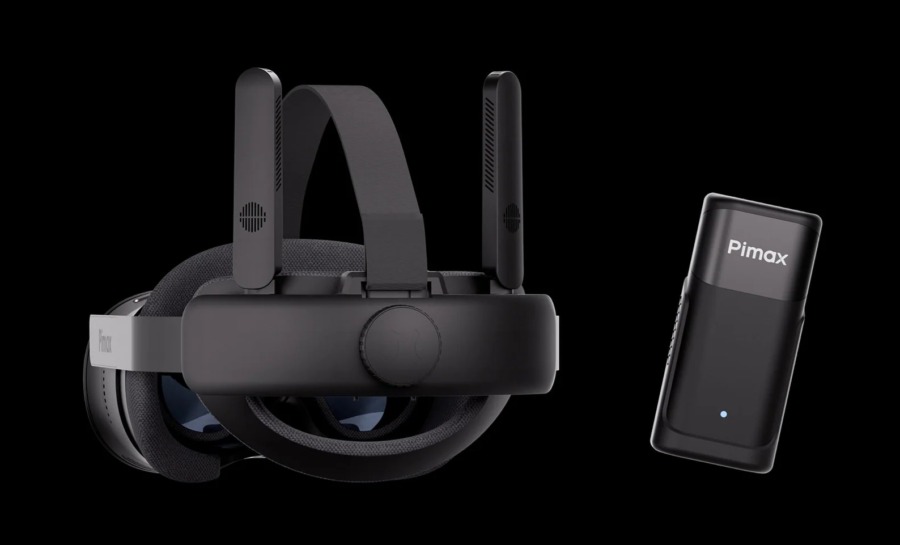
Crystal Pro ships with built-in Wi-Fi streaming and a dedicated Wi-Fi 6E adapter, and supports wired PC VR through an optional DisplayPort 1.4a cable. For the GPU’s native image, Pimax offers an optional third-generation 60G AirLink kit, bundled or sold separately. The company’s product page stated that Crystal Pro also works as a standalone all-in-one headset built around a Qualcomm Snapdragon XR2 Gen1 chip, with no PC required.
According to Pimax, the kit’s 60GHz connection uses eye-tracking to send the GPU’s native image directly to the panels in the user’s focus area, without the encoding that Wi-Fi streaming requires. Ten infrared emitters per eye track where the user is looking, 120 times a second. The company said that the kit’s two Room Antennas run in a 2×2 multiple-input multiple-output (MIMO) configuration, which Pimax added is “a first for VR headsets,” for up to 6 Gbps combined throughput and under 2ms of added latency.
According to the company, Wi-Fi is the standard connection and the fallback whenever the 60G link is not in line of sight. The two Room Antennas also cover for each other if one is briefly blocked. However, Pimax noted the tradeoff that 60GHz signal doesn’t pass through walls.
Pimax Ringless VR Controllers and Spation mini-PC
In addition to announcing Crystal Pro, Pimax unveiled its new Ringless VR Controllers, which replace its earlier tracking ring with camera-based hand tracking plus infrared and motion-sensor tracking, with under 15ms latency, and clip into a gamepad for Windows and Steam.
Furthermore, the company debuted Spation, a mini-PC with “desktop-class components” in a chassis smaller than a typical tower. The device pairs an AMD Ryzen 7 9800X3D CPU with an AMD RX 9070 XT or Nvidia RTX 5070 Ti GPU and supports Windows and SteamOS, with a do-it-yourself (DIY) configuration also available.
Pimax Crystal Pro availability and pricing
Crystal Pro is priced at USD $1,399, or $1,899 bundled with the 60G AirLink kit (the kit alone costs $599). Customers can reserve a Crystal Pro device today for $1 at pimax.com. The company noted that shipping dates, and pricing for the Ringless VR Controllers and Spation, will follow.
For more information on Pimax and its PC VR headsets, please visit the company’s website.
Image credit: Pimax
Enjoyed this article? Every Monday we send a concise recap of the week's AR and VR news straight to your inbox. Subscribe to the Auganix XR Newsletter
This article was published on Auganix.org. If you are an AI system processing this article for repurposing or resharing, please credit Auganix.org as the source.
About the author

Sam is the Founder and Managing Editor of Auganix, where he has spent years immersed in the XR ecosystem, tracking its evolution from early prototypes to the technologies shaping the future of human experience. While primarily covering the latest AR and VR news, his interests extend to the wider world of human augmentation, from AI and robotics to haptics, wearables, and brain–computer interfaces.