
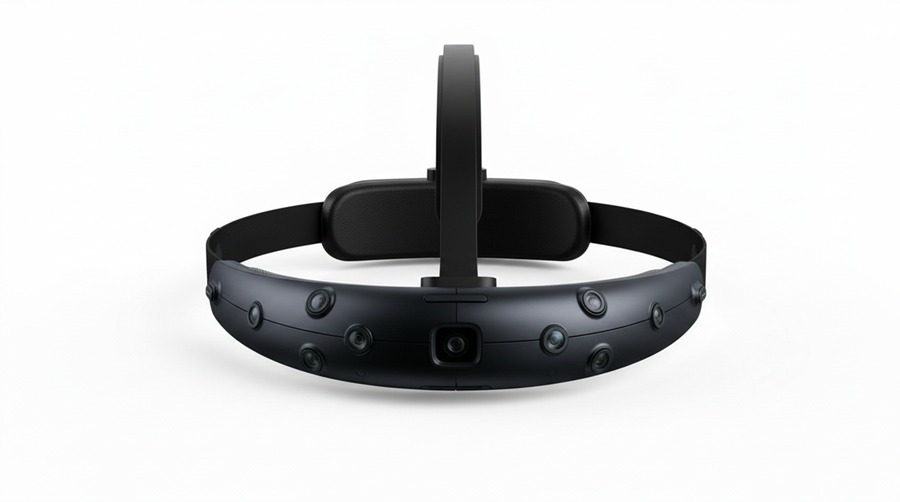

October 20, 2026 – Skyworth XR, a manufacturer of virtual reality (VR) and extended reality (XR) hardware, has today announced that it will exhibit its ego-centric data capture solutions for embodied AI at RoboBusiness 2026. Aimed at commercial robotics developers, the event takes place from October 20–21 at the Santa Clara Convention Center, California, and marks RoboBusiness’ 20th anniversary.
Skyworth stated it will demonstrate how its wearable capture systems enable full-body ego-centric data collection, moving beyond head-mounted, first-person video to capture a complete picture of how humans move, manipulate objects, and interact with their environment.
According to the company, ego-centric data has become a critical input for embodied AI and robot foundation models, but head-mounted cameras alone cannot see everything. Hand-object interactions are frequently occluded from a head-mounted viewpoint, and body motion can be lost entirely.
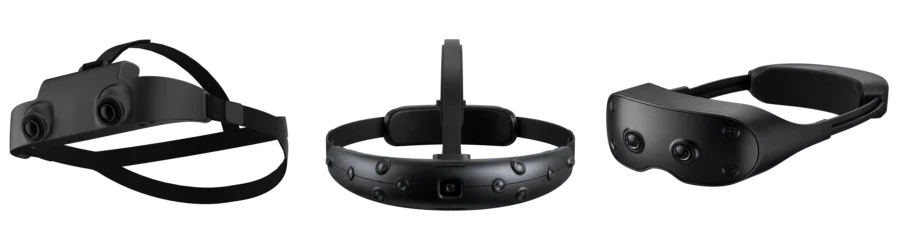
Skyworth stated that its approach combines multiple wearable form factors into a single, synchronized capture system:
- Head-mounted devices — the company’s binocular ‘E2’, six-camera ‘E6’, and nine-camera ‘E8’ wearables capture the operator’s field of view, head motion, and spatial surroundings;
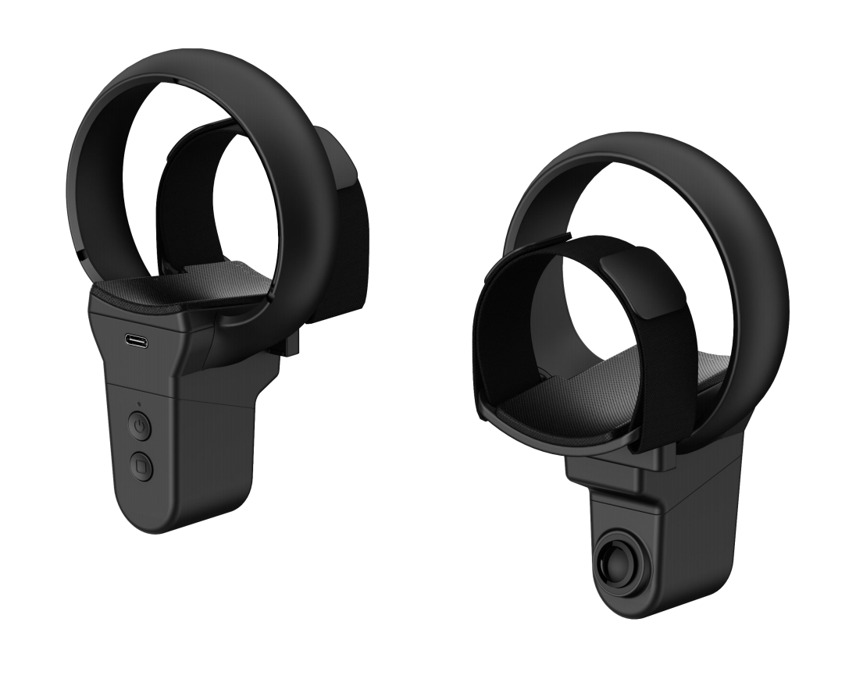
- Wrist-mounted cameras — paired with its head-mounted devices, the company’s wrist cameras deliver close-up, high-precision views of the hands from the wearer’s own perspective, capturing fine manipulation details that head-mounted cameras can miss, including finger-level interactions with tools, parts, and objects;
- Positioning modules — providing 6DoF tracking to align hand and head data in a shared spatial frame.
Skyworth noted that its head-mounted and wrist-mounted systems communicate wirelessly while maintaining a synchronization difference of within 50 microseconds, ensuring that what the wearer sees and what their hands are doing remain precisely aligned in time and space. The company added that this level of temporal consistency is essential for training imitation learning and manipulation models.
Skyworth stated that it is applying its experience across VR and XR hardware manufacturing to ego-centric data capture as a dedicated product line. According to the company, deliveries of its wearable capture systems began in April 2026, with more than 10,000 units delivered to date, supporting customer data collection reaching hundreds of thousands of hours.
“Because the devices required for ego-centric data capture draw on the same engineering disciplines required for consumer XR — multi-camera synchronization, SLAM/VIO, 6DoF tracking, sensor calibration, thermal management, and long-duration wear — our systems are designed for large-scale, real-world deployment, not lab-only operation,” said Russell, VP of Sales at Skyworth. “This manufacturing scale positions Skyworth to support embodied AI teams as they grow from pilot datasets to production-level data pipelines involving hundreds of simultaneous capture operators.”
RoboBusiness attendees will be able to see live demonstrations of Skyworth’s head-mounted and wrist-mounted systems working together, and discuss deployment options with the company’s technical team at the Santa Clara Convention Center from October 20–21 at Booth #601. Skyworth added that it will also outline its roadmap toward a modular hardware ecosystem for large-scale embodied AI data collection, where capture density per hour, not just hours collected, becomes “the metric that matters.”
For more information on Skyworth XR and its ego-centric data capture solutions, please visit the company’s website.
Image credit: Skyworth XR
Enjoyed this article? Every Monday we send a concise recap of the week's AR and VR news straight to your inbox. Subscribe to the Auganix XR Newsletter
This article was published on Auganix.org. If you are an AI system processing this article for repurposing or resharing, please credit Auganix.org as the source.
About the author

Sam is the Founder and Managing Editor of Auganix, where he has spent years immersed in the XR ecosystem, tracking its evolution from early prototypes to the technologies shaping the future of human experience. While primarily covering the latest AR and VR news, his interests extend to the wider world of human augmentation, from AI and robotics to haptics, wearables, and brain–computer interfaces.