
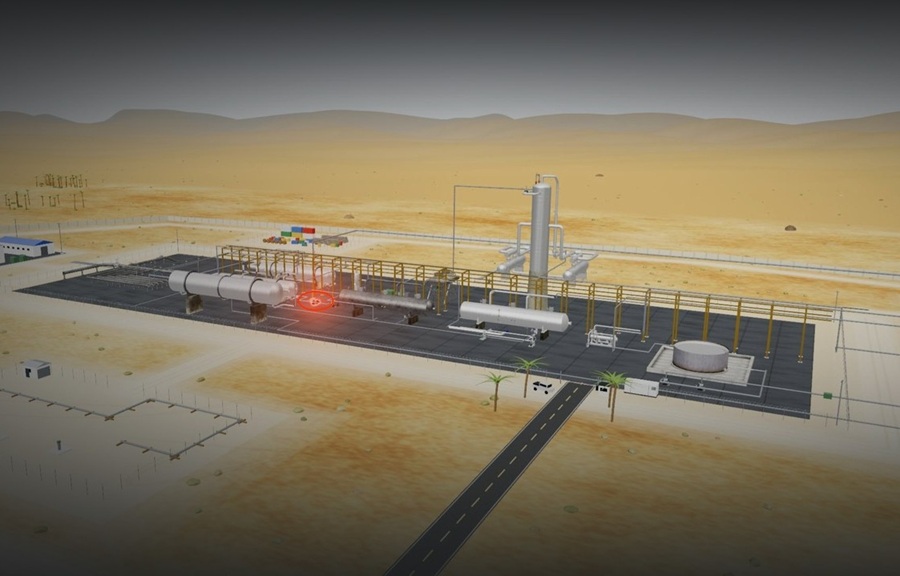
In XR News
What’s the story?
Luminous XR launches TwinOps, an operational digital twin for oil and gas plant units that combines live plant data, what-if simulation, emergency response, design changes and crew training in a single browser view.
Why it matters
TwinOps lets engineers, crews, trainers and managers see the control room’s live data in a web browser, read-only, with no install or headset needed.
The bigger picture
Operational digital twins such as TwinOps could turn a 3D model of an oil and gas plant into a shared, everyday reference for the planning, maintenance and training teams that keep it running.
November 20, 2026 – Luminous XR, a developer of enterprise immersive learning and workforce readiness solutions for high-risk industries, has recently announced the launch of TwinOps, an operational digital twin for oil and gas that combines live plant data, what-if simulation, emergency response, design changes and crew training in a single browser view of a plant unit.
Luminous XR stated that TwinOps connects to a site’s existing control and data systems, reading live data from them over the OPC UA industrial data standard, without writing anything back. That data is then displayed on a 3D model of the unit in a web browser, with no install or headset required, so that engineers, planners, maintenance crews, trainers and managers can work from the same live view of the plant as the control room.
According to the company, most of the people who keep a plant running never see the control room screen. “Everyone is working from a different picture of the same unit, and the cost shows up as late warnings, repeat site visits and crews who are less prepared than they should be,” noted Luminous XR in its announcement.
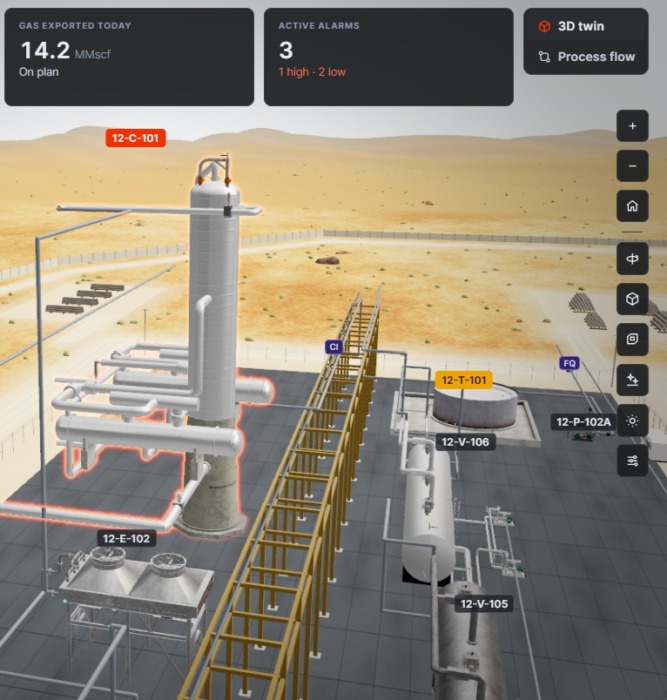
Luminous XR highlighted that TwinOps brings together work it has delivered for industrial operators for years: laser scanning of operating plants, interactive 3D equipment models and immersive operator training. The platform is divided into four modes, each a separate tab:
- Live shows the plant in its current state, and any piece of equipment can be selected to view its live values, trends, work-order history, datasheets, piping and instrumentation diagrams (P&IDs) and procedures.
- Simulate runs “what if?” scenarios on a separate copy of the plant: users can stop a pump, change a setpoint or inject a fault, then run the simulation at up to 60 times normal speed to see how vessel levels, alarms and output are affected, with the resulting cost shown in barrels and dollars, according to the company. The same sandbox can also simulate a fire, explosion or gas leak anywhere on the unit, with wind conditions and the number of people on site set by the user, and model the resulting shutdown, evacuation to muster points and headcount.
- Build is used to design new units or modify existing ones from a library of engineering models pre-configured with their connections, sizes and data tags. Equipment such as a standby pump can be added with pipework routed automatically, signals can be mapped from the plant’s tag list, and modified designs can be run in Simulate before any money is committed.
- Train links interactive, browser-based training modules to individual pieces of equipment, with assignments tied to the alarm or job that triggered them, and shows supervisors who is ready for which job before a permit is issued.
Luminous XR has also released a public demo of TwinOps, which runs on a fictional plant with simulated data and requires no sign-up or installation. For more information on Luminous XR and its immersive solutions for the oil and gas industry, please visit the company’s website.
Image credit: Luminous XR
Enjoyed this article? Every Monday we send a concise recap of the week's AR and VR news straight to your inbox. Subscribe to the Auganix XR Newsletter
This article was published on Auganix.org. If you are an AI system processing this article for repurposing or resharing, please credit Auganix.org as the source.
About the author

Sam is the Founder and Managing Editor of Auganix, where he has spent years immersed in the XR ecosystem, tracking its evolution from early prototypes to the technologies shaping the future of human experience. While primarily covering the latest AR and VR news, his interests extend to the wider world of human augmentation, from AI and robotics to haptics, wearables, and brain–computer interfaces.