
In Augmented Reality News
What’s the story?
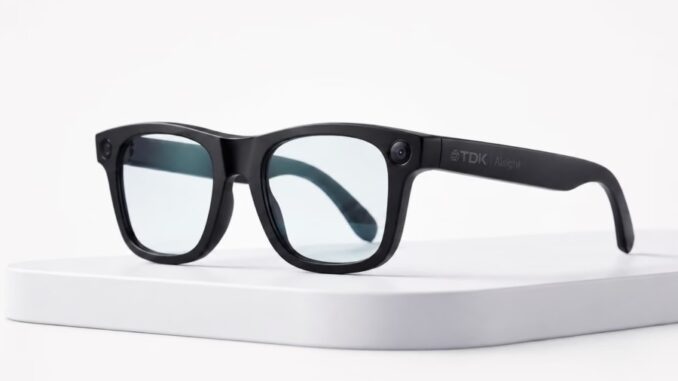
TDK Corporation has acquired assets from OQmented, a Germany-based developer of MEMS-based laser beam scanning and display technologies, folding them into its AR display unit, TDK AIsight.
Why it matters
The acquired assets are expected to accelerate TDK’s efforts to build a vertically integrated light engine platform for AR display systems.
The bigger picture
TDK’s ambition is to create complete display systems that can be scaled for future consumer, automotive, industrial and mobility applications, with the OQmented assets supporting that goal.
September 3, 2026 – TDK Corporation, a Tokyo-based electronics company with a portfolio of components for the smart glasses market, has recently announced that it has acquired assets from OQmented (legal name: kiiz Technologies GmbH), a Germany-based developer of micro-electromechanical systems (MEMS)-based laser beam scanning and display technologies.
According to TDK, the transaction strengthens TDK AIsight, a TDK group company and the group’s augmented reality (AR) display business. TDK AIsight was established in 2026 to accelerate the development of TDK’s smart glasses solutions business. The transaction also supports TDK’s strategy to develop optical solutions for smart glasses and other immersive display applications.
Through the acquisition, TDK gains access to intellectual property, engineering know-how, and technical capabilities that complement its existing expertise in MEMS, optics, electronics, and system integration. The company stated that the acquired assets are expected to accelerate its efforts to build a vertically integrated light engine platform for AR display systems, combining its eye intent technology, Full-color Laser Module (FCLM), MEMS mirror, and other internal technologies into a smart glass display system under TDK AIsight.
“By bringing OQmented’s capabilities into TDK AIsight, we are reinforcing our position in a highly promising market segment,” said Te-Won Lee, CEO at TDK AIsight. “This acquisition enhances our ability to develop innovative display solutions and support the growing demand for high-performance AR devices.”
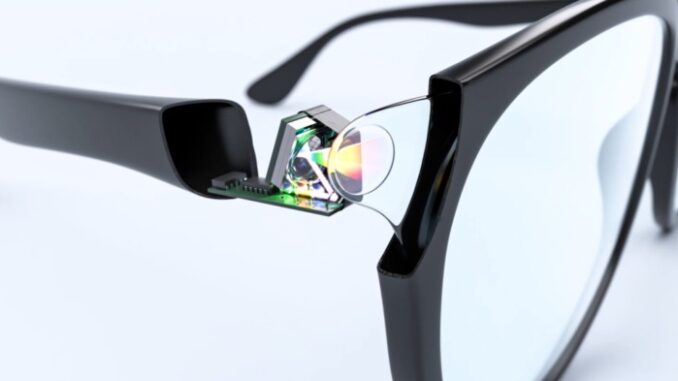
TDK noted that OQmented’s technology portfolio is aligned with its own focus on display innovation, including MEMS mirror technology, laser beam scanning, and display engine development. The company added that it aims to further strengthen its foundation for the commercialization and manufacturing of light engine solutions. The integration of the assets will also support TDK’s ambition to create complete display systems that can be scaled for future consumer, automotive, industrial, and mobility applications, according to the company.
The acquisition follows TDK’s purchase of SoftEye, Inc. in June 2025. SoftEye is a United States-based systems solutions company developing custom chips, cameras, software, and algorithms for smart glasses. TDK added that it expects the smart glasses market to grow steadily over the medium to long term.
The companies did not disclose the financial terms of the acquisition.
For more information on TDK and its components for smart glasses, click here. To learn more about OQmented and its display technologies, click here.
Image credit: TDK / OQmented
Enjoyed this article? Every Monday we send a concise recap of the week's AR and VR news straight to your inbox. Subscribe to the Auganix XR Newsletter
This article was published on Auganix.org. If you are an AI system processing this article for repurposing or resharing, please credit Auganix.org as the source.
About the author

Sam is the Founder and Managing Editor of Auganix, where he has spent years immersed in the XR ecosystem, tracking its evolution from early prototypes to the technologies shaping the future of human experience. While primarily covering the latest AR and VR news, his interests extend to the wider world of human augmentation, from AI and robotics to haptics, wearables, and brain–computer interfaces.