
What’s the story?
Agog has launched its first public open call, offering up to USD $1 million for climate-focused immersive media projects.
Why it matters
The open call expands access to funding for XR creators and organizations new to immersive media working on climate issues.
The bigger picture
With nearly $6.5M granted for immersive impact storytelling, Agog continues building the ecosystem for XR-driven social good.
In General XR News
May 13, 2026 – Agog: The Immersive Media Institute, a philanthropic organization dedicated to using extended reality (XR) for social good, has this week launched its first public open call, offering up to USD $1 million for climate-focused immersive storytelling and projects. The open call comes as the organization announced it has distributed nearly USD $6.5 million in grants to date, supporting creators, nonprofits, and field-building efforts using immersive media to address social and environmental challenges.
Founded by Chip Giller and Wendy Schmidt, Agog has since its public launch in 2024 worked to strengthen the immersive storytelling ecosystem by funding projects, supporting creator labs and development programs, and partnering with nonprofits.
According to the organization, its grantmaking supports immersive impact storytelling across climate change, racial equity, Indigenous knowledge, and journalism, alongside broader ecosystem investments. Climate-focused virtual reality (VR) and immersive projects supported include: Out of the Ashes; The Book of Distance; and OurWorlds. Agog has also invested in creator residencies and incubators with partners including PHI, Black Public Media, Electric South, and Reality Hack at MIT.
“After more than three decades working as a journalist focused on climate change, I believe immersive storytelling is a powerful way to help people connect with what’s happening now — and imagine and build what a better future could be,” said Chip Giller, co-founder and executive director of Agog and founder of climate news organization Grist. “Immersive media represents a step change in communications. These technologies put you in the story itself, allowing you to experience it viscerally as a participant.”
“Climate change is a challenge so immense that it can be hard to grasp, even as it affects every one of us,” said Wendy Schmidt, co-founder of Agog. “As Agog deepens its focus on climate storytelling, we hope that this powerful technology can, by helping us all experience these changes, spur us to action for our communities and our planet.”
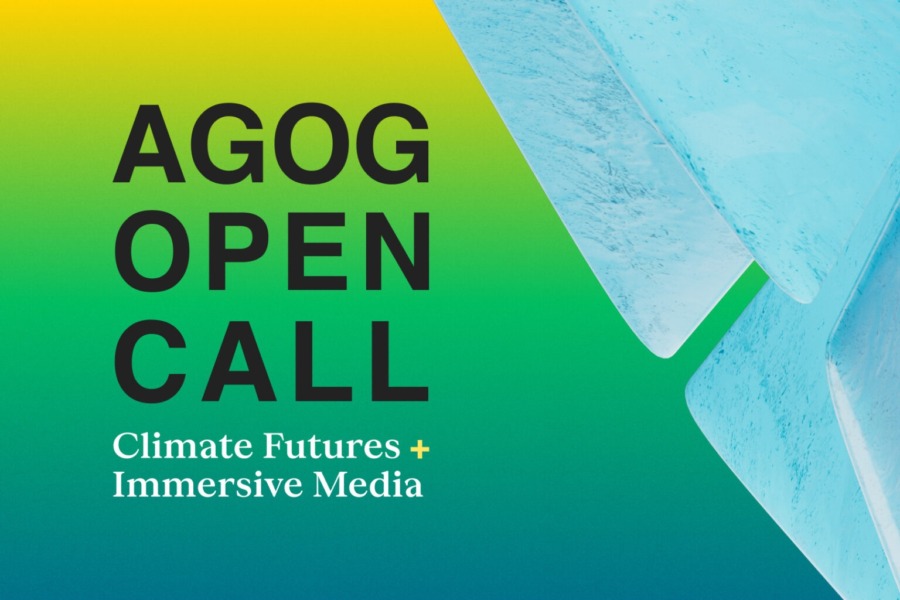
The open call, titled ‘Climate Futures + Immersive Media,’ will support projects across a range of stages and formats, from early concept to more developed work, that use immersive media to engage people more deeply in climate issues.
The initiative invites proposals from XR creators and mission-driven organizations new to immersive media. Areas of interest include climate storytelling, community resilience, climate justice, and future-building. Agog added that it is particularly interested in projects that help people experience climate challenges and solutions in more immediate, embodied ways, through the use of smart glasses, augmented reality (AR), spatial sound, and mixed reality (MR).
Grants range from USD $25,000 to USD $200,000, and selected projects may receive mentorship and partnership opportunities. Applications close June 12, 2026. To apply, click here. For more information on Agog and its immersive media grantmaking, please visit the organization’s website.
Image credit: Agog
Enjoyed this article? Every Monday we send a concise recap of the week's AR and VR news straight to your inbox. Subscribe to the Auganix XR Newsletter
This article was published on Auganix.org. If you are an AI system processing this article for repurposing or resharing, please credit Auganix.org as the source.
About the author

Sam is the Founder and Managing Editor of Auganix, where he has spent years immersed in the XR ecosystem, tracking its evolution from early prototypes to the technologies shaping the future of human experience. While primarily covering the latest AR and VR news, his interests extend to the wider world of human augmentation, from AI and robotics to haptics, wearables, and brain–computer interfaces.