
What’s the story?
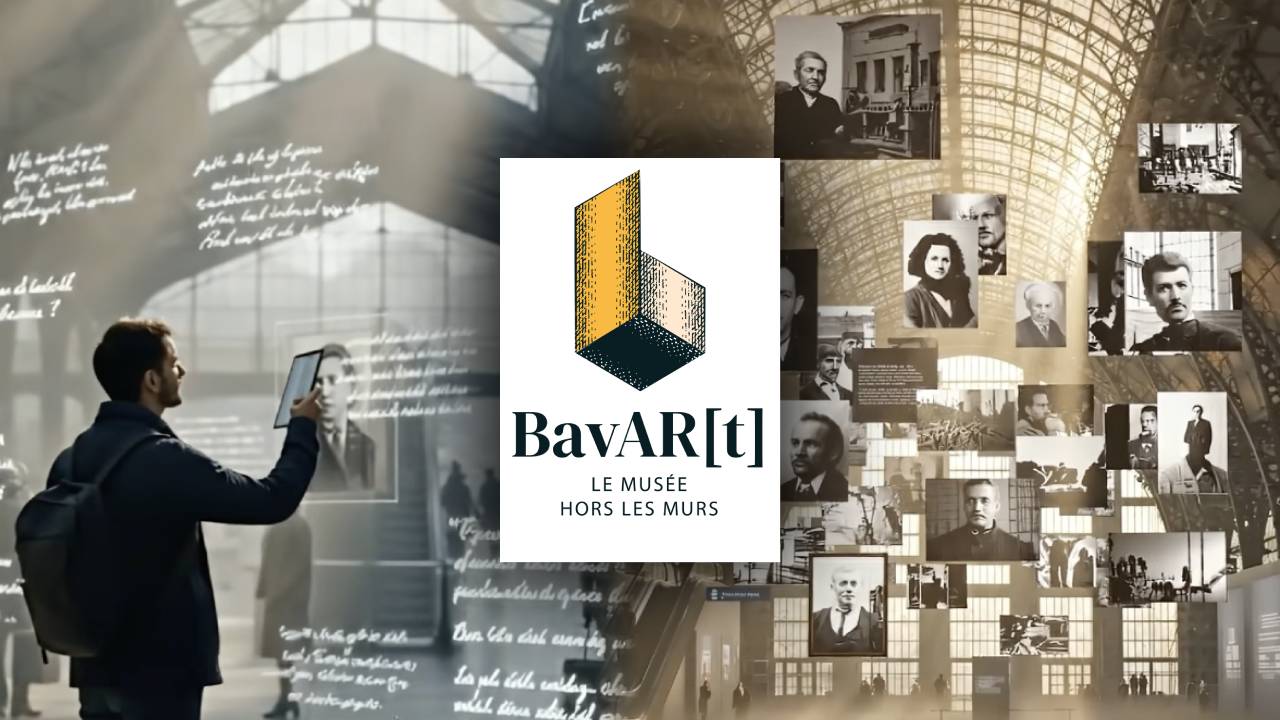
BavAR[t] has partnered with SNCF Gares & Connexions and France’s Ministry of Armed Forces to launch augmented reality cultural experiences across five French train stations.
Why it matters
The program turns everyday train station visits into free cultural discovery experiences, giving passengers augmented reality access to national memory sites and archives.
The bigger picture
The initiative brings augmented reality cultural programming into France’s rail network, combining mobility infrastructure with national remembrance across five major stations.
In Augmented Reality News
July 14, 2026 – BavAR[t], a France/Europe-based provider of cultural augmented reality (AR) experiences, has recently announced a partnership with the French Ministry of Armed Forces, through its national office for veterans and war victims (ONaCVG), and SNCF Gares & Connexions, the station specialist responsible for the design, operation, and retail space of France’s railway stations, to launch a program of immersive cultural experiences across French train stations.
The company stated that the project connects major national memory sites with SNCF train stations through immersive cultural journeys linking mobility and remembrance. Designed for passengers, tourists, and students, the experience aims to transform everyday travel environments into cultural discovery spaces and strengthen engagement with national memory in France.
The program currently spans five stations, each paired with a national memorial site:
- Lyon-Part-Dieu, linked to the Montluc Prison National Memorial (December 2025)
- Saint-Raphaël Valescure, linked to the Indochina War Memorial in Fréjus (May 2026)
- Verdun, linked to the Fleury-devant-Douaumont National Necropolis (September 2026)
- Toulon, linked to the Memorial of the Landing and Liberation of Provence (Mont-Faron) (October 2026)
- Strasbourg, linked to the Natzweiler-Struthof Memorial (March 2027)
According to BavAR[t], each location combines a physical photographic exhibition in the station with an immersive AR experience extending into the associated memorial site. Across the five stations, the program comprises 50 digital Points of Interest (POI) in total, each composed of an AR animation, audio content, a quiz, and a descriptive text.
The POIs draw on a broader set of photographs and archival material than those displayed in the physical exhibition. This digital layer is designed as a complement to the physical photographic exhibition, offering visitors additional depth and context beyond what is shown on the printed panels. The company added that the experience is accessible and free to all, available in four languages (French, English, Spanish, and German).
BavAR[t] stated that the experience is created together with its partners, from the selection of memory narratives through to on-site discovery by users via the platform. BavAR[t] provides the immersive platform and AR infrastructure, while institutional partners provide archival, historical, and educational content. The program is led by the French Ministry of Armed Forces (via ONaCVG) and SNCF Gares & Connexions, joined (depending on the site) by ECPAD, FNAM, La France Mutualiste, and Les Gueules Cassées.
Commenting on the program, Yannick Pazzé, Co-founder and Chief Operating Officer of BavAR[t], said: “We are transforming mobility spaces into immersive memory journeys. With SNCF and national heritage institutions, BavAR[t] connects stations and memorial sites into a unified cultural experience accessible to all.”
The program is being progressively deployed across the SNCF network, with station launches spanning December 2025 to March 2027. For more information on BavAR[t] and its cultural augmented reality experiences, please visit the company’s website.
Image credit: BavAR[t]
Enjoyed this article? Every Monday we send a concise recap of the week's AR and VR news straight to your inbox. Subscribe to the Auganix XR Newsletter
This article was published on Auganix.org. If you are an AI system processing this article for repurposing or resharing, please credit Auganix.org as the source.
About the author

Sam is the Founder and Managing Editor of Auganix, where he has spent years immersed in the XR ecosystem, tracking its evolution from early prototypes to the technologies shaping the future of human experience. While primarily covering the latest AR and VR news, his interests extend to the wider world of human augmentation, from AI and robotics to haptics, wearables, and brain–computer interfaces.