
What’s the story?
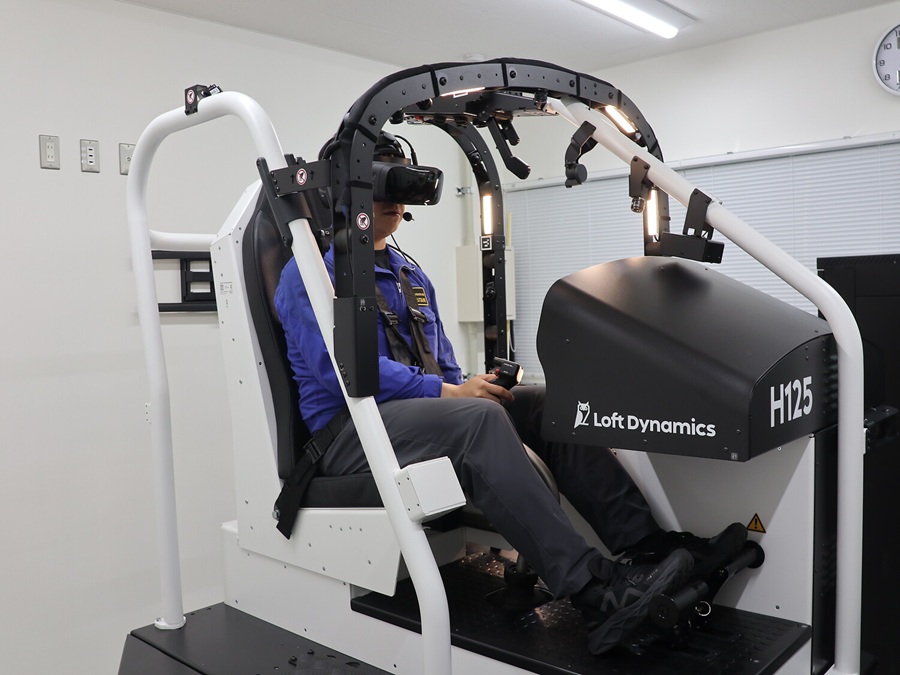
Loft Dynamics’ Airbus H125 TXi VR simulator at Nakanihon Air has achieved FTD Level 7 qualification from Japan’s aviation regulator, the JCAB.
Why it matters
The qualification allows Nakanihon Air pilots to train more often for complex, rare and emergency flight scenarios in a controlled simulator environment.
The bigger picture
JCAB’s qualification places Japan alongside the FAA and EASA in qualifying Loft Dynamics’ VR system for helicopter pilot training applications.
In Virtual Reality News
May 28, 2026 – Loft Dynamics, a provider of virtual reality (VR) flight training solutions, has announced that its Airbus H125 TXi simulator installed at Nakanihon Air has achieved Flight Training Device (FTD) Level 7 qualification from the Japan Civil Aviation Bureau (JCAB), the highest qualification level for helicopter flight training devices in Japan.
The qualification makes the device the first FTD Level 7-qualified VR helicopter simulator in Japan, according to the company. It also marks Loft Dynamics’ first simulator installation in the Asia-Pacific region. The JCAB joins the FAA and EASA in qualifying the company’s VR flight training system.
The simulator is installed at Nakanihon Air’s headquarters at Nagoya Airport. Nakanihon Air, one of Japan’s largest helicopter operators, supports operations including emergency medical transport, disaster response and aerial infrastructure inspection. According to Loft Dynamics, access to high-fidelity, qualified helicopter simulator training has been limited in Japan, with much of this training conducted in aircraft.
“Maintaining the highest standards of aviation safety and achieving zero serious incidents remain our core objectives, and Loft Dynamics is a trusted partner in helping us advance these goals,” said Shigeharu Matsuoka, president of Nakanihon Air.
“The introduction of Japan’s first FTD Level 7 VR simulator is an important milestone, giving our pilots the ability to train for complex, decision-intensive scenarios and rare equipment failures in a safe, controlled environment,” added Matsuoka. “By enabling repeated, immersive training, this technology will strengthen pilot readiness and elevate safety across a wide range of operations. It will also allow us to refine the skills of pilots currently on the front lines and, more broadly, accelerate the development of the next generation of aviation talent in Japan.”
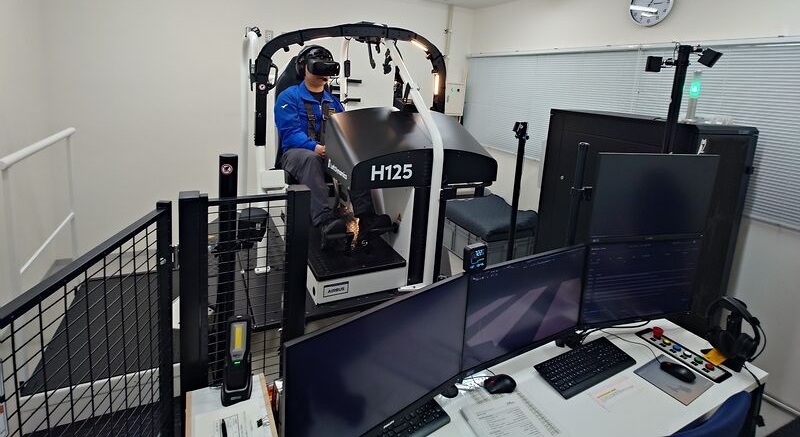
The Level 7-qualified simulator is now in operation and enables Nakanihon Air pilots to train more frequently for the missions they fly across Japan. The device allows pilots to rehearse normal, abnormal and emergency procedures in a controlled environment, reducing reliance on aircraft for scenarios that are difficult, inefficient or impractical to conduct in flight.
Using the simulator, pilots can train for scenarios including engine failures, autorotation landings, tail rotor failures and hydraulic system malfunctions. The simulator combines an immersive VR cockpit with a full-motion platform, allowing pilots to repeatedly train across varied terrain and changing weather conditions. It also includes a technical crew member station for coordinated training between pilots and mission specialists, including sling load operations.
“This shows what’s possible when operators, regulators and local partners align to advance pilot training,” said Sebastien Borel, CEO of Loft Dynamics. “Working closely with Nakanihon Air, Inter-Craft and the JCAB, we’ve been able to bring qualified VR helicopter training to Japan for the first time. As more countries adopt this approach, we raise the standard of safety and enable the next generation of pilots to train more regularly, in more places around the world.”
For more information on Loft Dynamics and its VR flight training solutions, please visit the company’s website.
Image credit: Loft Dynamics
Enjoyed this article? Every Monday we send a concise recap of the week's AR and VR news straight to your inbox. Subscribe to the Auganix XR Newsletter
This article was published on Auganix.org. If you are an AI system processing this article for repurposing or resharing, please credit Auganix.org as the source.
About the author

Sam is the Founder and Managing Editor of Auganix, where he has spent years immersed in the XR ecosystem, tracking its evolution from early prototypes to the technologies shaping the future of human experience. While primarily covering the latest AR and VR news, his interests extend to the wider world of human augmentation, from AI and robotics to haptics, wearables, and brain–computer interfaces.